


Japan has increasingly adopted automated immigration technology to speed up border procedures, meaning many travellers may now pass through the airport without receiving a passport stamp. However, for those who still want to have the traditional exit or entry stamp, which is often considered a souvenir for those who have traveled, they can still apply for it under certain conditions. According to the Immigration Services Agency of Japan, facial recognition automated gates are being used at airports to streamline immigration procedures as part of the country’s broader effort to improve travel facilitation while maintaining strict border checks.
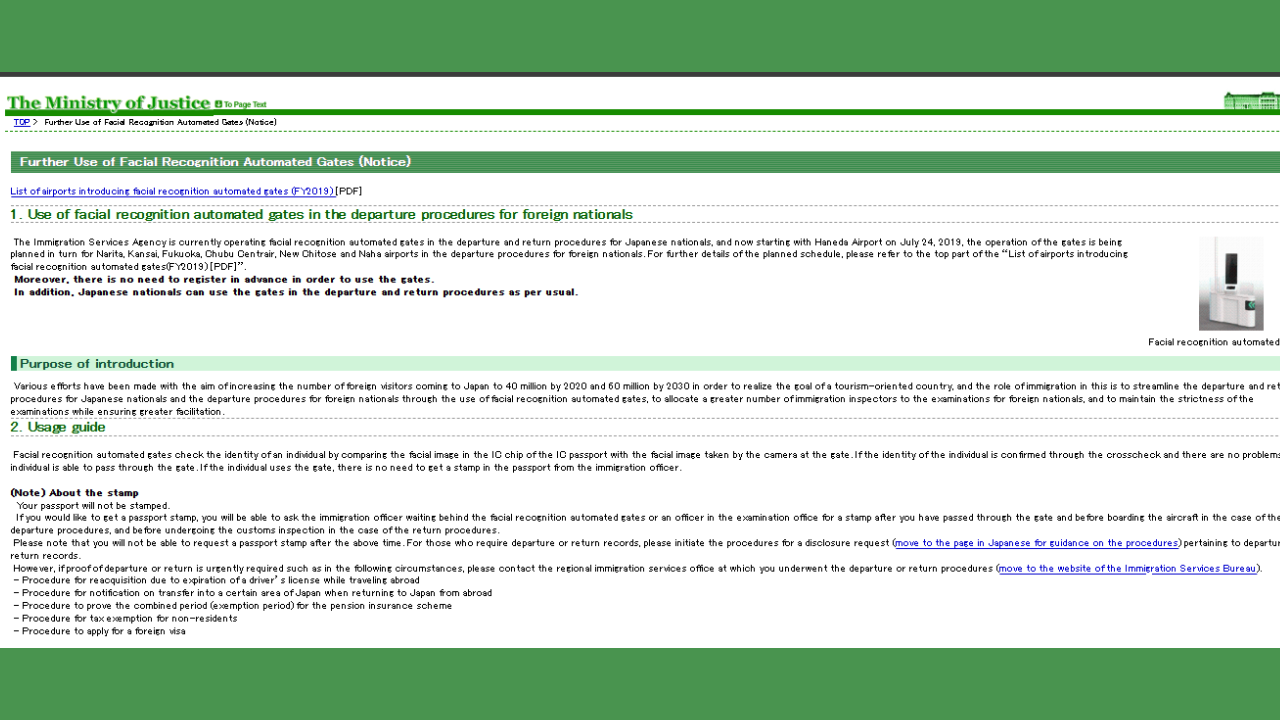
Ministry of Justice
Why Japan is using automated gates
Japan has implemented these systems as part of its long-term tourism plan, which is geared towards increasing the number of foreign visitors to the country. In the past, the government has set its targets at increasing the number of foreign visitors to 40 million annually and later increasing it to 60 million in 2030. In order to process the increasing numbers of travelers efficiently, immigration has installed facial recognition technology for automated gates, where travelers with biometric passports can go through the immigration process without the need to interact with an immigration officer. The system works by comparing the facial image stored in the IC chip of a biometric passport with the facial image taken by a camera image at the gate. If the system confirms the traveller’s identity and finds no issues, the gate opens automatically and the passenger can proceed.
Why your passport may not be stamped
Travellers who pass through the automated gates will not automatically receive a passport stamp. This is because the system processes the departure or arrival digitally once the facial recognition verification is completed. As a result, there is no manual inspection booth where a stamp is normally issued.
How to still get a passport stamp
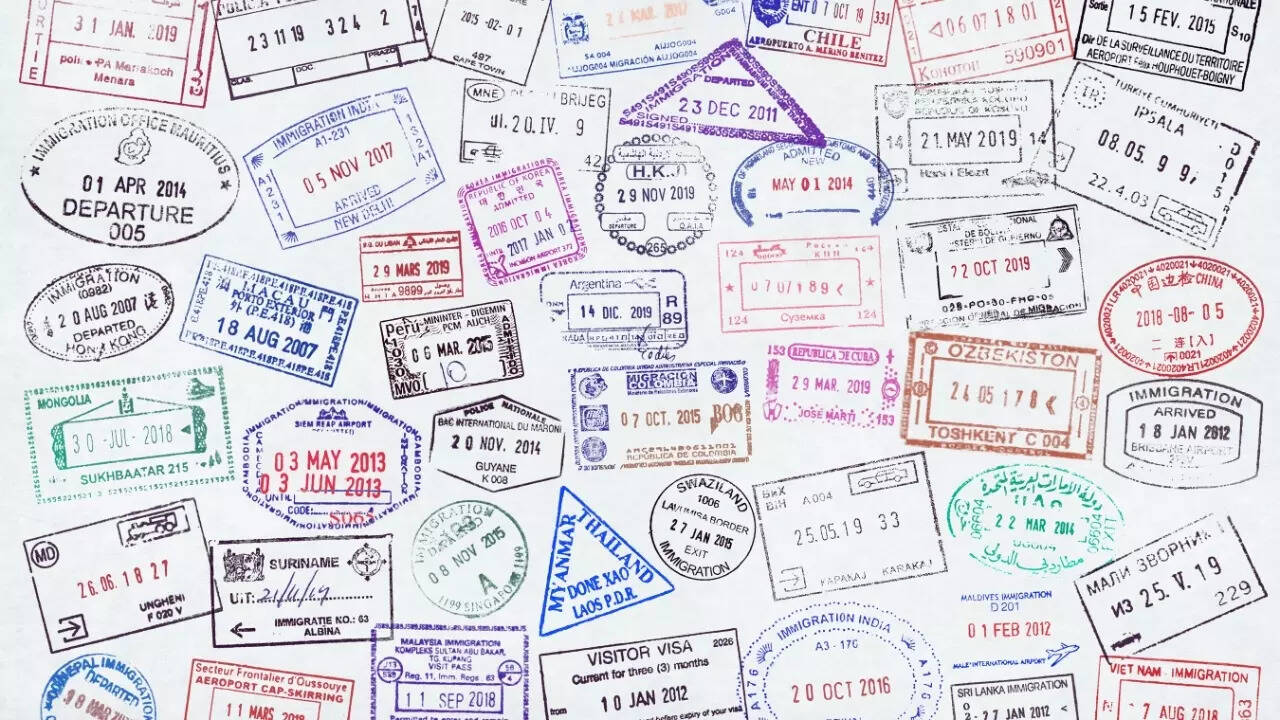
Stamps on passport
For travellers who want a physical stamp, Japan’s immigration authority says it is still possible, but you must request it immediately after using the automated gate.
Here is how it works:
After passing through the facial recognition gate, approach the immigration officer stationed behind the gate or at the inspection office. Request a passport stamp before boarding the aircraft if you are departing Japan. If you are arriving in Japan, request the stamp before proceeding to customs inspection.
Important timing rule
Travellers should note that stamps cannot be requested later. Once you have left the designated immigration area, such as after boarding procedures or after passing customs, immigration officials will not issue a stamp retroactively.
When a stamp may still be necessary
Although many travellers simply want stamps as souvenirs, immigration authorities note that official travel records may sometimes be required for administrative purposes, such as: visa applications for other countriestax exemption procedures for non-residentspension insurance documentationresidency registration procedures in Japancertain administrative procedures when returning from abroad In such cases, travellers can also request official travel records from immigration authorities if needed.
Who can use the automated gates
The facial recognition gates can be used if travellers hold an IC (biometric) passport, can operate the machine independently, are at least 135 cm tall, in the case of foreign nationals, entered Japan with Temporary Visitor status and are departing the country.Travellers may also be directed to a manual immigration counter if the system cannot verify their identity. While automation is expected to make airport procedures faster, travellers who enjoy collecting stamps can still obtain one, provided they ask an officer before leaving the immigration area.