
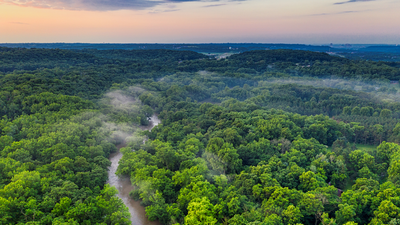
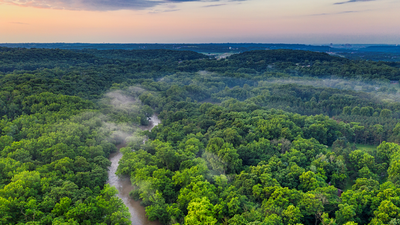
Hidden away on the northeastern coast of South America is a country so green and lush that it seems like something out of a fantasy world. Suriname, a country often forgotten on the world stage, is literally overrun by the forces of nature. While other countries are struggling to maintain their natural environments, Suriname is flourishing as the world’s greatest treasure for the environment, untouched, untamed, and incredibly important for the future of the world. This is the country that boasts an astonishing 93% of its land covered by dense rainforest, earning the title of the most forested country on the face of the Earth.
Suriname: The most forested country in the world
Suriname is famous for something unusual but simple: its forests. According to environmental information, as per the Forest Reference Level (FRL) report, approximately 93% of the country’s landmass is covered with an abundance of tropical rainforests. This makes it the country with the highest percentage of forest coverage. Unlike other industrialised countries, Suriname has retained vast areas of untouched wilderness. A large part of the country is part of the Amazon biome and is home to unique species such as jaguars, river otters, and harpy eagles. Despite all this, the country remains unknown to the world. It has a low population density, with the majority living in the northern coast. This has contributed to the country retaining its wilderness.
A global leader in forest conservation
However, Suriname is not only rich in forests but also excels in the field of forest conservation. Suriname has been designated a “High Forest, Low Deforestation” (HFLD) country by the World Wide Fund for Nature (WWF). This means the country has high forest cover and low levels of deforestation. Suriname has also established itself as a leader in the international arena on the issue of climate change. As stated in the United Nations Framework Convention on Climate Change, during the COP-23, Suriname had promised to retain its 93 per cent forest cover forever. This has also made Suriname one of the few carbon-negative countries in the world. This means the country absorbs more carbon dioxide than it produces. Suriname’s forests have been described as “carbon sinks” and have played a crucial role in the fight against global warming.
Why Suriname matters more for current environmentalists
In an ever-changing world where the global forest cover is continually reducing to about 31% of the total land area covered by forests, countries like Suriname are vital.The rainforests in Suriname control the climate, support biodiversity, and provide habitats for indigenous peoples who have lived in harmony with nature over the centuries. These rainforests are not only beneficial to the country; they are the lifeline of the globe.Despite the importance of the rainforests in Suriname, the country is faced with the challenge of preserving such an enormous resource. The country has, over the years, pleaded with the international community to support it financially and technologically in the preservation of the rainforests without compromising economic progress.
The hidden green giant of the planet
While Suriname may not be the sort of place that makes the evening news or the average tourist guidebook, its significance cannot be overstated. In an age in which the word “climate” is used more than just about any other word in the dictionary, this quiet nation of forests and woods serves as a powerful model for what it means to live in harmony with nature.This nation’s story is one in which the most significant places on Earth are the ones we hear about the least.