
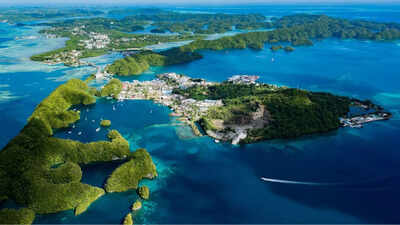
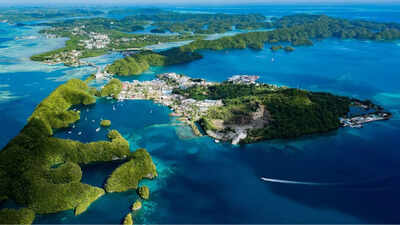
Tourism constitutes an essential source of economic support for many small island nations around the world, but at times it also endangers the same environments that make such places popular among tourists. Palau, a Pacific nation with an incredible coral reef and rich marine life, has a difficult situation at hand – how can it increase tourism while also preserving different environments around the land? In order to deal with such issues, Palau asks each tourist to sign a written promise as soon as they arrive at the immigration station, admitting their personal involvement in preserving different resources around Palau. As a part of the immigration system in Palau, Palau Legacy Pledge can well be called a new source in tourism development – it uses both authority and morality for the purposes of sustainable tourism.
How the Palau Legacy Pledge influences visitor behaviour
Launched in 2017, the Palau Legacy Pledge is a promise that tourists take on behalf of Palauan children that they personally will not do any harm to the environment and the locals during their visit. It is actually printed on the tourists’ passports and signed by all arriving tourists at their entry point into the country. Despite its seeming success, however, this project also uses behavioural science tools not only to understand how the pledge could be effective on its intended targets, but also how its elements work together effectively. As cited in a case study published Westminster Papers in Communication and Culture, the pledge offers an effective mix of being an indicator of integrity, its use of storytelling, and its ability to cite the letter of the law. Furthermore, it appeals to the visitor on their capacity, at least temporarily, to make all the difference for the environment and ecology on the island that they will be visiting.
How tourism and climate change affect Palau’s ecosystems
Ecosystems in Palau are of great value yet under threat. As part of the Coral Triangle, the reefs in Palau have some of the highest levels of marine biomass in the world. These not only provide sustenance for the fishing industry but also serve as natural barriers against the shores. Mangroves, seagrass habitats, and freshwater habitats are additional components that provide stability to the ecological system. However, as the number of tourists increases, the dangers of erosion to the system also rise. Such activities as touching or even breaking the corals while snorkelling or diving can seriously impair the environment. Also on land, exceeding the demand for freshwater access, trail erosion patterns, and waste disposal pose additional challenges. Climate change acts as yet another challenge that affects the system. It causes the death of corals due to rising sea levels. The sign serves as a preventive strategy that urges the tourists to act in ways that reduce their impact before the damage is done.
How a moral pledge replaces traditional rules in Palau
In contrast to traditional regulatory methods, the Palau Legacy Pledge is a moral contract rather than a set of enforceable regulations. The impact of the pledge relies not on enforcement but on symbolism and the timing and meaning that it has for these tourists as they enter the country at the border control checkpoint. In this way, there is a fusion of governance through legal means and the latest discoveries about human behaviour to produce a system that relies not on punishment but on self-regulation of visitor attitude and activity after their arrival at Palau. In this way, not only do these tourists behave differently upon arrival at Palau, but their attitudes change as well, as a consequence of this moral contract rather than traditional regulations.
Why does Palau link tourism to heritage and responsibility?
The pledge is grounded in Palauan customs related to the responsible management of the land and the sea for the sake of future generations. From a Palauan perspective, natural resources are community property, managed not for their current use but as an inheritance for community members of the future. By linking these principles with a contemporary approach to tourism, Palau is able to demonstrate its autonomy in an international industry where, very often, economic interests lie with non-national parties. At the international level, the project has sparked the attention of governments, environmental bodies, and tourism operators concerned with sustainable tourism. Its success, however, is contingent on public adherence to wider environmental policies.
How does the pledge turn awareness into action for tourists?
The Palau Legacy Pledge is a success story that exemplifies how strategic communication can and does lead to sustainable behaviour. Through a skilful integration of advertising tools, narrative structures, and moral suasion, the Palau Legacy Pledge engages a moral imperative and turns a vague notion of ecological stewardship into specific behaviour. Taking or making a pledge is thus both a technical and ritualistic act, connecting visitors emotionally with and through the spaces they travel. Though not a panacea for all ecologically challenging issues, the Palau Legacy Pledge is one piece of a full strategy that promotes visitor norms and expectations that reinforce a balanced and sustained conservation strategy. A key model for managing sustainable growth in a balanced and sustained manner through a merger of behaviour change and governance.Also Read | Is the water on your flight actually safe to drink? Flying, hygiene and health