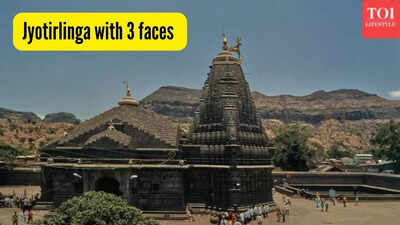
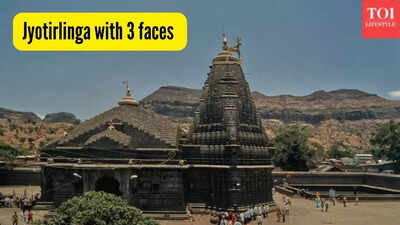
Some journeys begin with plans, others begin with faith and create a perfect premise for stories we carry for a lifetime. My drive from Mumbai to Trimbakeshwar Temple, one of India’s most unique Jyotirlingas with three faces, began like a beautiful monsoon retreat. The Sun was playing hide and seek with clouds and the Western Ghats smelled so fresh and clean. I was happy. I had planned the trip with my parents and my two-year-old toddler who was fast asleep beside me. But we had no idea that within hours, the peaceful journey would turn into a fierce storm that would test our patience, courage and faith.The only Jyotirlinga with three facesTrimbakeshwar is no ordinary place. Situated close to Nashik in Maharashtra, it is a place of pilgrimage destination. For those who don’t know, this is the only Jyotirlinga temple in the world where Lord Shiva is worshipped in a three-faced form. These three faces symbolise Brahma (the creator), Vishnu (the preserver), and Mahesh (the destroyer). Unlike other temples, there is no vertical lingam to see at Trimbakeshwar. Instead, we bow before three small protrusions set within a silver crown. It is a perfect symbol of balance.For devotees of Lord Shiva, Trimbakeshwar is deeply sacred. For curious travellers, this is a place where mythology and nature meet. The temple town is set at the foothills of the Brahmagiri range, from where the revered Godavari River originates.Journey from Mumbai to Trimbak The drive from Mumbai to Trimbakeshwar is around 180 km which takes around 5-6 hours. The road passes through the beautiful Kasara Ghat. By the time we reached the temple town, it was noon. The weather was perfectly pleasant, with a calm wind blowing into my hair. We all felt absolutely calm. We parked our car in the temple’s designated parking area with ease. I was mesmerised with the town’s natural setting. The place was alive with the views of mountains, chitchat of devotees, shopkeepers calling out from small stalls. A ₹200 Pass The locals told us that there is no long queue so the ‘darshan’ can be done easily. So, we decided to stand in the normal devotees line. But soon we realised that it would take three hours to reach inside the temple. I decided to skip the line and get ourselves VIP tickets because my mother had a bad knee issue and standing or even walking for long hours is not possible for her. It’s a fact that temple darshan can be overwhelming, especially with elders and toddlers. Also, the weather outside suddenly turned all windy.Flying utensils and tins After enquiring, I got to know that the VIP darshan counter is about a kilometer from the temple. I asked my parents to sit inside the restaurant with the baby. I left to get the pass, which turned out to be one of the stupidest decisions of the trip! You’ll know why soon. I started walking aimlessly not knowing exactly where the centre was. And within seconds, the sky changed its mind and it started drizzling which quickly transformed into a scary stormy situation. Within minutes, the coastal wind started howling like a warning siren. Rain lashed down with unexpected force and chaos unfolded.There were several shops selling metal utensils (bartans) which started flying. I had never experienced a coastal storm before. Soon the tin-roofed stalls in the region were violently rattling, some even collapsed. I was scared and far away from my parents and family. I remember making them sit inside one of these flying tin restaurants. I had to take shade under an ATM building nearby. The roads echoed with the sound of people shouting, and rain pounding. For nearly half an hour, it felt like the town was locked in a battle with nature.The moment the rain faded, I decided to continue my journey. I got out and saw myself staring at a large statue of Lord Ganesha. The idol was shaded by a tin sheet from three sides. And suddenly, the storm intensified and the tin began to sway ferociously, creaking under the force of the wind.It was then that fear gripped me. The tin threatened to break free at any moment. Had it fallen, people in the area could have been seriously hurt.But it didn’t. Instead it became a shelter.The tin sheet, wildly unstable, was stopped by the presence of the Ganesha idol under it. The massive statue acted like a physical barrier and time slowed in that moment. In that terrifying hour, it felt like Lord Ganesha himself stood guard, shielding devotees from harm. Everything was overwhelmingly positive at that moment, because when faith protects, fear loses its power.Soon, I reached the ticket centre only to be told that tickets could be booked easily on the official website. And that’s when I felt stupid. I booked online passes. The process was simple, and organised. The entry was easy without long queues.The moment I stepped inside, the energy changed. There was water everywhere but the winds froze and the weather turned peaceful, as if the last hour did not happen. It was such a grounding experience that made us feel so small in front of Mother Nature’s power. The chants of ‘Om Namay Shivay’ filled the air. The stone walls darkened by centuries of prayers and devotion created a sense of timelessness. We greeted the main pandit who gave blessings to my baby and a piece of water-filled coconut to me. The temple was crowded with devotees but at that moment I felt standing alone standing before the three-faced Jyotirlinga. It was one of those moments that can only be experienced, and can’t be described in a few words.An experience etched in timeTravelling with a toddler changes how you experience places. Every sound feels personal and louder, every danger closer. Yet watching my child, happy and dancing and so unaware of the storm’s magnitude, made the moment even more beautiful. It then striked me why families undertake pilgrimages together: not just to seek blessings, but to share belief across generations.My parents, believers, later said something that stayed with me: “These are the moments that make faith personal.”Rituals that followed
Close to the temple is the Kushavarta Kund, it is a sacred tank connected to the origin of the Godavari. Devotees perform rituals here. There are several small markets selling rudraksha beads, copper vessels, puja items, incense and Godavari Shiva Lingams (very famous). I also picked up a few souvenirs and a Godavari Shiva Lingam.How to reach Trimbakeshwar TempleBy Road: Well connected from Mumbai and Nashik. Regular buses and private taxis are available.By Train: Nashik Road Railway Station (around 30 km away) is the nearest major railhead.By Air: Mumbai is the closest major airport; from there, road travel is the best option.We returned to Mumbai tired but emotionally full and blessed.