
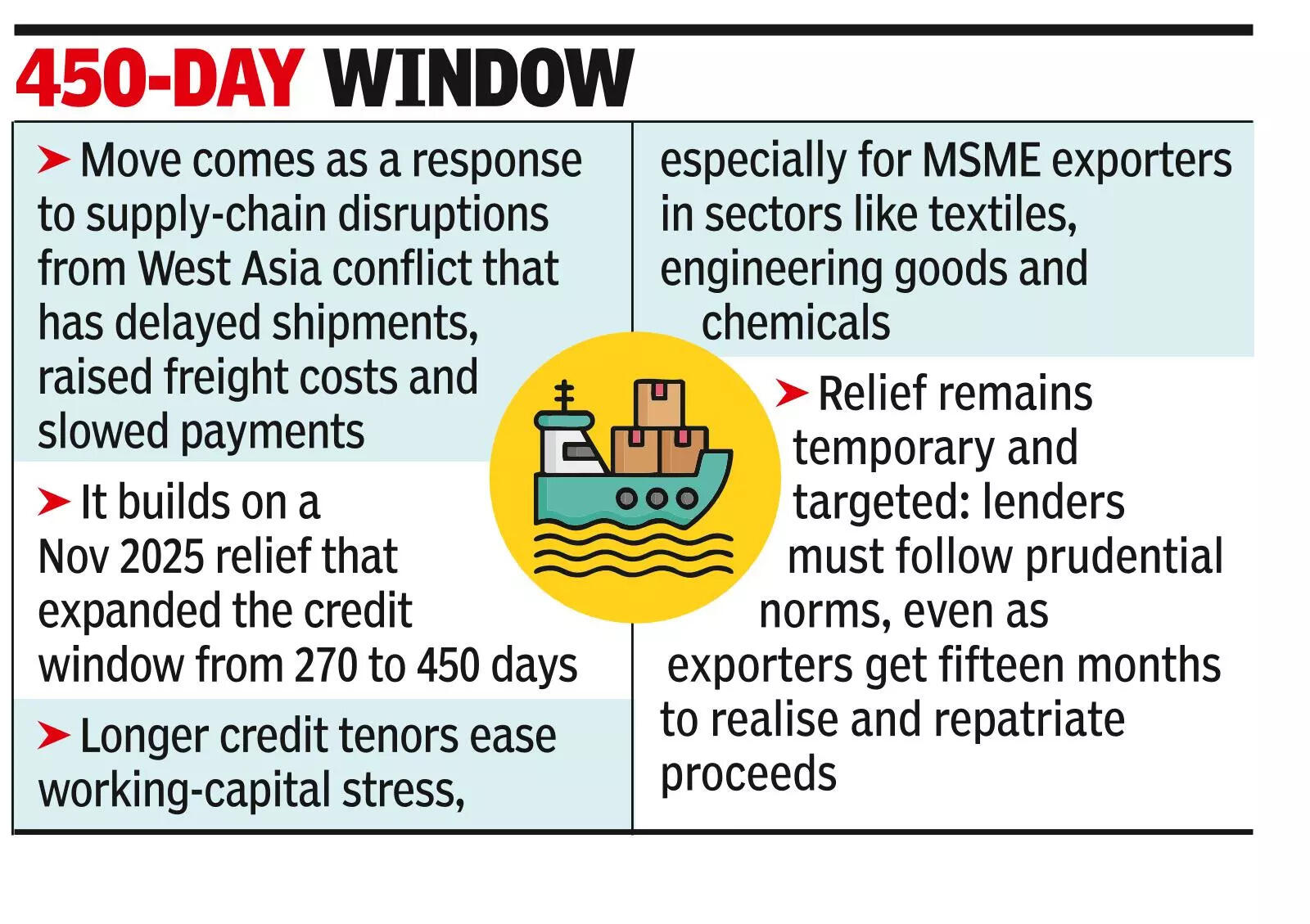
MUMBAI: In a move that will buy more time for exporters, the Reserve Bank of India extended a pandemic-style leniency on trade finance, allowing pre- and post-shipment export credit to run for up to 450 days for all disbursements made until June 30, 2026. The measure, effective immediately, is meant to cushion firms grappling with snarled logistics and delayed payments as conflict in West Asia disrupts global shipping arteries.The decision builds on relief measures unveiled in Nov 2025, when the RBI first stretched the credit window from 270 to 450 days for loans sanctioned up to March 31, 2026. That earlier intervention responded chiefly to a sudden spike in American tariffs, which squeezed exporters’ margins. The latest extension reflects a shift in the nature of the shock. Where tariffs threatened to dent competitiveness, war is dislocating trade itself. The confrontation involving America, Israel and Iran has forced vessels to reroute, inflated freight costs and lengthened transit times, leaving consignments stranded and payments deferred. Bankers said that the relief measures were crucial as bulk of the exporting entities are MSMEs, the main drivers of employment and investment.
Breathing Room For Exporters: Credit Tenure Runs Till June 30
For exporters, the consequences are acute. Industries such as textiles, engineering goods and chemicals which are deeply reliant on West Asian corridors, face elongated working-capital cycles and uncertain cash flows. By allowing lenders to extend credit tenors, the RBI is smoothing a liquidity crunch that might otherwise choke viable firms. The circular applies across banks, non-bank financiers and other regulated institutions, which may grant the longer tenor subject to their own risk controls. It also permits lenders to square off existing packing-credit facilities, where goods are yet to be shipped, using alternative sources, including domestic sales or proceeds from substitute export orders. Such flexibility acknowledges a reality in which shipments are delayed or cancelled outright.The central bank has, however, stopped short of forbearance. Prudential norms remain in place, and lenders are expected to monitor exposures . The relief is temporary and targeted, not an opportunity to evergreen stressed loans. Alongside this, the RBI has retained an earlier concession allowing exporters 15 months, rather than nine, to realise and repatriate export proceeds. Together, these aim to keep trade flowing and balance sheets intact until geopolitics loosens its grip on supply chains.