
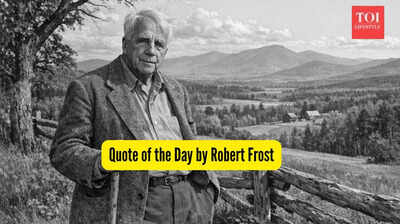
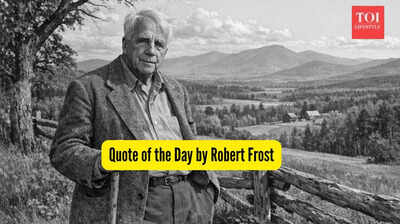
Most people reading this have grown up reading the most celebrated poem of Robert Frost that say, ” Two roads diverged in a yellow wood and sorry I could not travel both..”. These lines have moved people for generations. Robert Frost is still one of America’s most famous poets. He is known for his simple but deep views on everyday life. Frost was born in 1874 in San Francisco to a father who was a journalist and a mother who was a teacher. His father died when he was 11, so the family moved east. He grew up in New England, where he farmed and taught while writing poetry. He also had to deal with personal tragedies, such as losing four of his six children and his wife Elinor. These losses changed how he honestly saw the struggles of people, even though he won four Pulitzer Prizes and read at JFK’s 1961 inauguration. Robert Frost was the kind of poet who made poetry feel like a conversation over coffee. His lines were deep without trying too hard, and they drew you into the quiet corners of New England life. Frost wrote in simple, everyday language that sounds like New England farmers talking. He used iambic pentameter and rhymes to make the rhythm sound natural. He begins with real places, like roads or woods, and then adds deeper thoughts about being alone or making choices, mixing fun with sharp insight. He uses metaphors from nature to make his point without using fancy words.Drawing inspiration from regular life stuffRobert Frost was a brilliant writer. His special ability lay in turning daily mundane happenings into the profound reflections of the human soul. Take his most famous poem, “The Road Not Taken.” Everyone quotes those opening lines: “Two roads diverged in a yellow wood, and sorry I could not travel both.” It sounds simple, right? A guy at a fork in the woods picks one path and muses on what might’ve been. But Frost layers it with irony. The roads aren’t that different, both “worn…really about the same,” yet years later, the speaker claims the “less traveled” one “made all the difference.” It’s a sly poke at how we rewrite our choices in hindsight, romanticizing regrets. Frost wrote it for his buddy Edward Thomas, who obsessed over which path to take on walks, and it became this anthem for individuality that folks misread as a call to rebel. That’s Frost for you, playing with our assumptions.
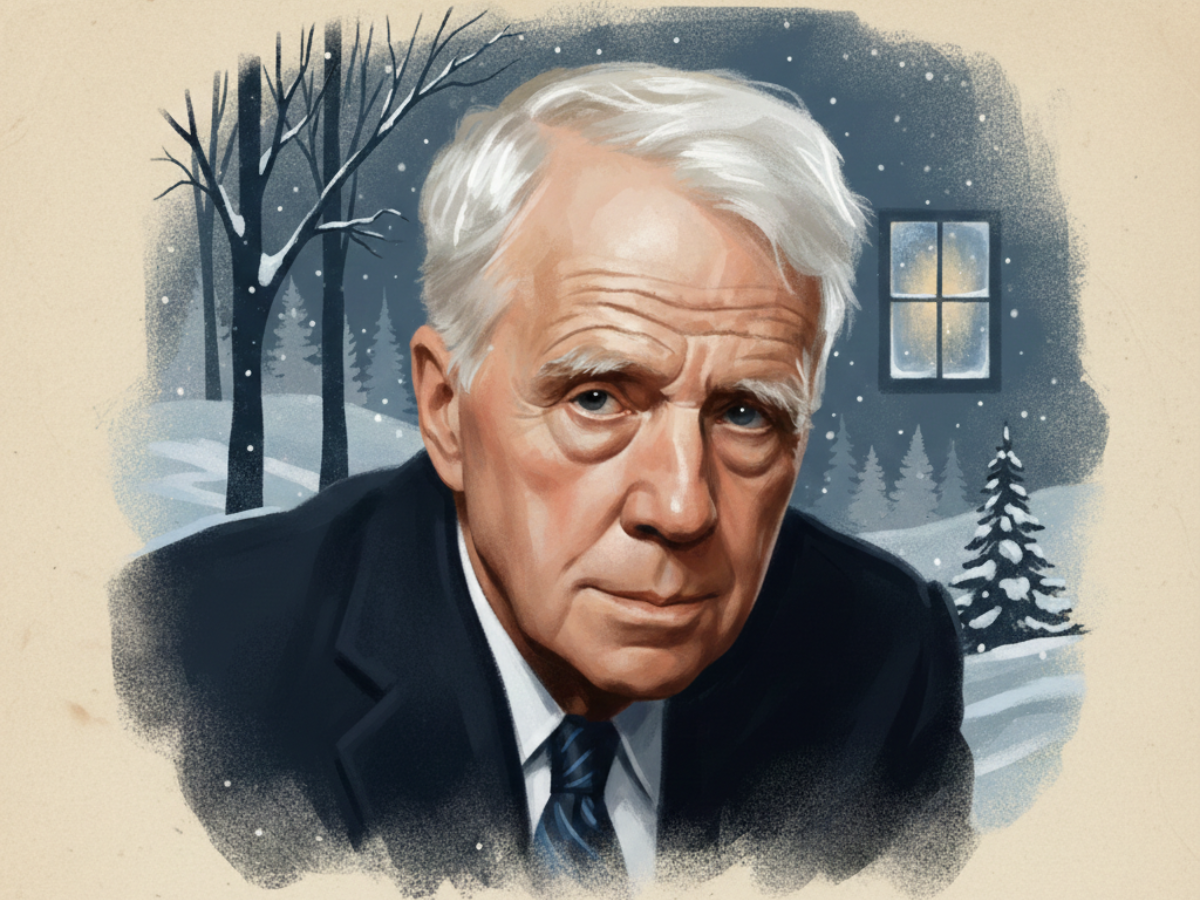
A unique style of writing which was simple yet impactfulHis style was deceptively plain, like a neighbor leaning on a fence. He’d use iambic tetrameter or pentameter, the heartbeat rhythm of talk, with rhymes that clicked naturally, ABAB or AABB schemes that didn’t feel forced. No flowery Victorian fluff, just crisp New England speech: words like “fence,” “wall,” “birches,” “snow.” Nature wasn’t backdrop; it was a metaphor. In “Mending Wall,” neighbors rebuild a stone barrier each spring, chanting “Good fences make good neighbors.” Is it about property lines or the walls we put up between people? Frost leaves it hanging, forcing you to chew on isolation and tradition. Or “Stopping by Woods on a Snowy Evening,” where the pull of dark woods tempts a weary traveler, but duties call him home: “The woods are lovely, dark and deep, / But I have promises to keep.” Suicide? Rest? Life’s grind? He never spells it out.The quote which became so popularOne of the most witty and iconic lines of Robert Frost other than his poem, Two Roads, is, “A diplomat is a man who always remembers a woman’s birthday but never remembers her age.” In this poem Frost tries to give men a perspective about women in the most interesting manner. Frost says that a smart man is someone who will not at any cost miss a woman’s birthday. Remembering her special day will always keep him dear in her eyes, but he should not be very sharp in remembering her age because that is something women do not want to be reminded of. So the secret to a successful relationship is selective memory! Remembering what she wants and forgetting what she does not.Frost wasn’t flawless. Some saw him as crusty, competitive, feuding with peers like T.S. Eliot. Late years brought bitterness, but his warmth shone through readings, folksy anecdotes charming crowds. He died in 1963 at 88, blind but still quoting his lines. Over 50 years later, he endures because he wrote like life: messy choices, frozen woods, and mended walls. No preaching, just questions in plain clothes. Reading Frost feels like walking those diverged roads yourself, wondering which way you leaned, and smiling at the ambiguity. He’s the poet who makes you pause mid-stride, notebook in hand, seeing poetry in the next birch tree.