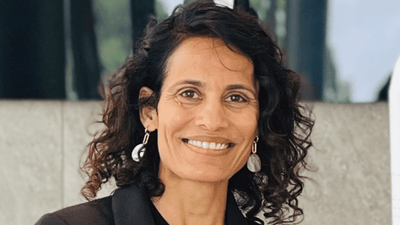
Vandi Verma has emerged as one of the key figures behind a landmark moment in planetary exploration. On December 8 and 10, 2025, NASA’s Perseverance successfully completed the first-ever drives on Mars whose routes were planned by artificial intelligence rather than by human rover drivers. The achievement marked a major shift in how robotic missions could operate as exploration pushes farther from Earth.The demonstration was carried out along the rim of Jezero Crater and relied on advanced AI systems to analyse terrain, identify hazards, and generate safe driving waypoints. According to NASA, the approach could significantly reduce the time and effort required to plan rover movements while maintaining the strict safety standards demanded by interplanetary missions.NASA Administrator Jared Isaacman described the test as a glimpse into the future of space exploration, saying autonomous technologies like generative AI would allow missions to operate more efficiently and respond better to challenging environments as distance from Earth increases.
Vandi Verma’s journey from India to the forefront of NASA
Vandi Verma was born in India and raised in a family closely connected to aviation, with her father serving in the Indian Air Force. Frequent moves during her childhood exposed her to aircraft and engineering environments, helping nurture an early interest in technology and exploration. She completed her schooling in India before studying electrical engineering at Punjab Engineering College in Chandigarh.Seeking deeper specialisation, Verma later moved to the United States, where she completed both her master’s degree and PhD in robotics at Carnegie Mellon University. Her research focused on autonomous systems and fault diagnosis, work that would later prove essential for operating complex machines in remote, high-risk environments such as Mars.
A career shaped by Mars exploration
Verma joined NASA’s Jet Propulsion Laboratory (JPL) in 2007 and soon became part of the Mars rover operations team. Over the years, she has worked on multiple flagship missions, including Spirit, Opportunity, Curiosity, and Perseverance, contributing to rover mobility, autonomy software, and surface operations.On the Perseverance mission, she serves as Chief Engineer for Robotic Operations, overseeing how the rover navigates terrain, avoids hazards, and executes complex command sequences. Her role focuses on ensuring that new autonomy tools can be safely integrated into real mission operations.
Inside the AI-planned Mars drive
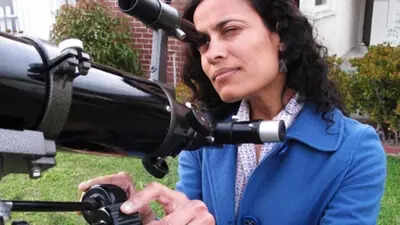
For the December 2025 test, generative AI systems analysed orbital imagery and rover navigation data to identify rocks, slopes, and sand features before producing a continuous driving route with waypoints. Traditionally, this planning process is carried out manually by teams of human planners on Earth.To ensure safety, the AI-generated commands were extensively validated using JPL’s digital twin of Perseverance, checking hundreds of thousands of telemetry parameters before being transmitted to Mars. The rover then executed the drive successfully, closely following the AI’s proposed route.Commenting on the breakthrough, Verma said the test showed how generative AI could streamline core elements of rover navigation, including perception, localisation, and planning, while reducing operator workload. She noted that such tools could eventually enable kilometre-scale rover drives and help identify scientifically interesting features more efficiently.
Why NASA sees this as a turning point
NASA officials say the success of the AI-planned drive could reshape how future robotic missions are run, particularly as agencies prepare for sustained lunar operations and eventual human missions to Mars. With communication delays making real-time control impossible, greater onboard and ground-based autonomy is seen as essential.Matt Wallace, manager of JPL’s Exploration Systems Office, said intelligent systems capable of operating across rovers, drones, and surface platforms would be critical for building the infrastructure needed for long-term human presence beyond Earth.For Vandi Verma, the milestone represents both a professional achievement and a broader step forward for space robotics, demonstrating how carefully tested AI can work alongside human expertise to expand the boundaries of exploration.