
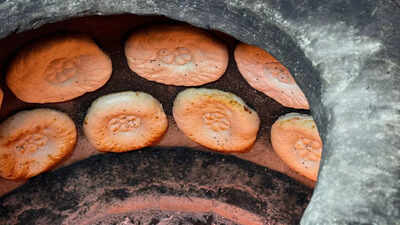
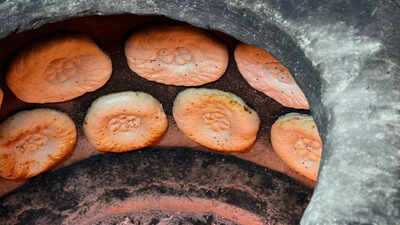
The deep charred, smoky flavour and crusty, spiced tandoori exterior is inextricably linked with the classical tandoor oven, but this is no longer tenable in today’s living standards. The tandoor is fueled by charcoal and/or wood, both materials that produce massive amounts of smoke, carbon monoxide, and fine particulate emissions that increase air pollution and health dangers when near residential areas. As matters stand, their use is particularly difficult in urban and apartment complex settings because of reduced ventilation. In other cases, the matter is straightforward: tandoori owners simply lack a tandoor, and their acquisition is nonsensical because a tandoor needs significant space and is a bother to handle and maintain, for equipment that is only occasionally used. Better kitchen equipment, technology and food science research indicate that what defines tandoori cuisine is unrelated to tandoor cooking equipment and that tandoor-cooked cuisine can actually be replicated with superior, cleaner, and more available alternatives that incur zero cost to the environment and living space.
Four simple kitchen methods that replace a traditional tandoor
There are a number of common cooking methods that can replicate the high temperature of tandoori cooking. Each of these methods is suited for various foods as well as various quantities.
- Oven grill or Broiler, which gives intense radiant heat from above, is used for dishes requiring direct charring, like chicken tikka, paneer tikka, fish fillets, seekh kebabs, and cauliflower florets
- Cast-iron grill pans or skillets are known to provide excellent heat retention, making them perfect for prawns, boneless chicken, mushrooms, sliced eggplant, peppers, and meat mix kebab patties
- Convection oven, where hot air circulation ensures even cooking and browning, suited for whole chicken legs, tandoori aloo, stuffed mushrooms, vegetable platters, and thick fish cutlets
- Air fryer, which is able to heat and focus in an enclosed environment and produce crispy exteriors efficiently, is recommended for smaller portions of chicken wings, paneer cutlets, tofu, broccoli, baby corn, and soy kebabs
Methods that employ the use of electricity or gas, as opposed to solid fuels, generate less smoke while also providing better temperature regulation.
How to get the flavour, texture and aroma of tandoori food
The sensory attributes of tandoori cuisine are due to various chemical reactions brought about due to high temperatures and the interaction of spices, fat, and proteins. They are required to be achieved through methods of food processing and not through equipment.
- Yoghurt marinade, in which lactic acid works to break down protein, making it tender, helping spices adhere to meat, paneer, or vegetables
- Oil-spice mixtures enable fat-soluble ingredients of flavours from spices like paprika, cumin, or coriander to develop during the cooking process.
- High temperatures are required in the activation of the Maillard reaction process in the creation of charred surfaces.
- Smoked spices such as smoked paprika or smoked chilli powder giving a smoked, aromatic compound like the compound found in burned wood
- Smoking techniques that can be used briefly to impart flavour to cooked foods by exposing them to smoke from heated spices, without penetrating the entire kitchen with smoke
These technologies combined are able to recreate the traditional flavour of tandoors and are suitable for indoor cooking.
Everyday tandoori cooking tips and what to keep in mind
Incorporating tandoori dishes into a domestic meal routine demands some knowledge of how domestic appliances work with high temperatures. The key to successful cooking is technique, not equipment.
- Adequate pre-heating to ensure that the oven or grill is at maximum temperature before adding the food to prevent steaming and allow it to sear immediately
- Enough space, enabling air circulation around individual items, facilitating drying of moisture, as well as even browning.
- Portion control, slicing the ingredients to the correct thickness for the cooking method to prevent undercooked centres or burned surfaces, and cooking the meat to preserve its juices and prevent
- Turning/rotating, compensation for irregular heat distribution in grills, ovens, or air fryers
- Close attention is needed to marinades, as yoghurt and spice mixtures can darken very quickly and need to be taken away from the heat source
- Awareness of ventilation, use of extract fans or opening windows to remove lingering diffusion of high-temperature cooking smoke
With these in mind, cooking in the tandoori style becomes a viable part of home cooking. This is especially true because the green energy sources, coupled with an understanding of cooking techniques, make it possible for people to enjoy their favourites without the associated negatives, such as pollution, size, and upkeep, inherent in cooking in a traditional tandoor.Disclaimer: This article is intended for general informational purposes only. Cooking methods and results may vary depending on individual appliances, ingredients and conditions. Readers are advised to follow standard kitchen safety practices and use their own judgment when preparing food at home.Also Read | Why some foods are better eaten raw