
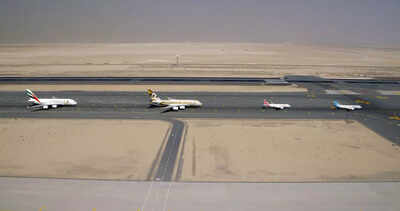
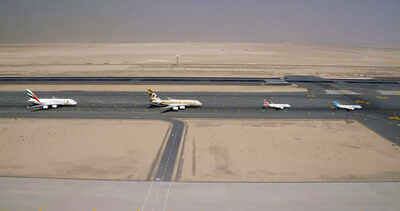
The global aviation industry is reeling from a massive wave of disruptions today, Sunday, March 1, 2026, as the escalation of conflict between the US, Israel, and Iran has forced the closure of multiple airspaces. With over 700 flights cancelled and hundreds more rerouted, one of the world’s most critical air corridors is virtually offline.What began as localized restrictions has expanded into a regional state of emergency, affecting every major carrier from Dubai’s Emirates to Air India and European giants like Lufthansa.
Middle East airspace closures
A sharp escalation in hostilities involving the United States, Israel and Iran sent shockwaves through global aviation today, grounding hundreds of flights and forcing airlines to suspend operations across key Gulf hubs.Airspace over parts of Iran and neighbouring corridors has either been closed or declared unsafe. This has severely disrupted one of the world’s busiest aviation corridors linking Europe, Asia and Africa via the Gulf.According to aviation data cited in regional reports:
- 716 flights were cancelled today (March 1) by early afternoon
- More than 1,800 flights were cancelled the previous day
- Thousands of passengers are stranded or rebooked
- Key transit hubs like Dubai International Airport are operating under partial disruption
UAE flight suspensions today
Major UAE carriers temporarily paused operations to ensure passenger safety during the peak of regional tensions.
| Airline | Operational Update | Duration | Passenger Options |
| Emirates | Suspended all Dubai departures | Until 3 PM UAE time | Free rebooking or full refund |
| flydubai | Suspended all flight operations | Until 3 PM UAE time | Rebooking and full refunds |
| Etihad Airways | Suspended select departures | Early operational window | Flexible changes & rebooking |
Flights resumed gradually after 3 PM, but schedules remain unstable with potential rolling delays. Airlines warned that further adjustments may occur depending on airspace safety assessments.
Air India cancel international flights
Indian aviation was hit particularly hard today. The Ministry of Civil Aviation of India warned that around 444 international flights could be cancelled on March 1 due to the ongoing restrictions over Middle Eastern and Gulf airspace. Local carriers including Air India, IndiGo, Akasa Air and Air India Express extended their suspension of westbound and Middle Eastern services as a precautionary measure. By late evening, airports like Mumbai’s Chhatrapati Shivaji Maharaj International Airport logged close to 98 cancellations, including key long-haul routes to London, New York, Chicago and European cities that normally transit Gulf airspace.Domestic airports were placed on operational alert, some declared they had no capacity for additional diverted aircraft until early Sunday due to a lack of parking space. These cancellations have stranded passengers and caused one-way fare prices to soar astronomically, some flights to London for March 1 travel were reported at around ₹1.4 lakh (about $1,700).
What’s happening?
Today’s travel chaos did not happen in isolation. The backdrop for these cancellations is a dramatic surge in military hostilities that began in late February and intensified into March 1. After months of simmering tension, joint airstrikes by the United States and Israel targeted Iranian military infrastructure, including leadership facilities, as reported by independent outlets.In response, Iran launched missile strikes at regional targets including U.S. bases and locations in neighbouring Gulf States. This led to reported damage at civilian infrastructure such as Dubai’s international airport area and at least one fatality in Abu Dhabi. Multiple countries, including Iran, Israel, Kuwait, Iraq, Bahrain, Qatar, and the UAE, responded by closing their airspace to civilian aircraft amid safety fears. These closures effectively shut down the main east-west airflow route, which thousands of flights use daily, leading to the widespread aviation disruption that continues today.
What must travellers do now?
Travellers flying today or within the next few days must remain proactive and flexible. First, passengers should check flight status directly through airline websites or official mobile apps before heading to the airport, as schedules are changing frequently. Arriving at the airport without confirmed departure status may lead to unnecessary waiting.Second, travellers with affected bookings should immediately explore rebooking or refund options. Most airlines are offering fee waivers due to the extraordinary circumstances, but seats on alternative flights are limited and filling quickly. Acting early increases the chance of securing an earlier replacement flight.Third, passengers with connecting itineraries should contact airlines to confirm onward segments, as a single cancellation can automatically void the rest of the ticket if not managed properly. Travel insurance providers should also be notified if coverage includes trip disruption, hotel stays or missed connections.Fourth, those planning new travel over the coming week should consider flexible or refundable fares, as the geopolitical situation remains fluid. Experts advise avoiding tight layovers and choosing direct routes where possible to reduce exposure to cascading disruptions.Finally, travellers are urged to monitor official government advisories and airline alerts closely. With military tensions still unfolding, aviation authorities may impose further restrictions at short notice.
A situation still evolving
As of late evening March 1, airlines continue to review operations hourly. While some services have resumed, uncertainty remains high. Aviation officials emphasise that safety considerations will determine the pace of normalisation. For now, travellers across the UAE, India and beyond face a volatile travel environment shaped not by weather or technical faults, but by geopolitical instability at the heart of one of the world’s busiest air corridors.