
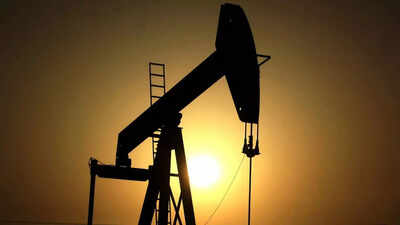
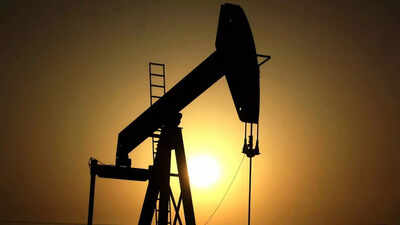
NEW DELHI: India has sufficient foreign exchange reserves, low current account deficit and inflation rates, which collectively allow it to effectively mitigate the impacts of rising global crude oil prices and ensure domestic energy security despite the country’s high dependency on imported crude oil, a finance ministry report said on Friday.But it cautioned that if the crisis in West Asia persists, it could have “material implications” for the exchange rate and the current account deficit and could stoke inflationary pressures.“Subdued capital flows, accentuated by a flight to safety, could put pressure on the currency. Some sectors dependent on LNG and crude, like fertilisers and petrochemicals, could be affected if the crisis is prolonged,” said the finance ministry’s monthly economic report for Feb.It said strong macroeconomic fundamentals and continued reform momentum position the economy well for expansion. “In view of positive developments, including recent successful trade deals and consecutive strong growth of 7%+ over the previous three years, real GDP growth has been upgraded to 7.0-7.4% for FY27,” said the report. The report also cautioned that the levels of volatility in macroeconomic outcomes and financial markets, and the world’s uncertainty, have risen due to the conflict in West Asia and are likely to remain elevated for some time. “Regardless of the immediate ‘end game’ for this conflict, it may have made the long-term ‘end game’ for lasting peace in the Gulf and beyond less clear,” said the report. It said that the implications of this conflict for India are significant and may be longer-lasting in ways that are not immediately understood.“Even if only latent for now, the risks to India’s balance of payments may have become elevated due to this conflict. Stress-testing balance-of-payments under various scenarios has to be undertaken periodically,” said the report.It added that India enters the next financial year with a solid macroeconomic backdrop, unlike during the previous turbulent episodes in the Gulf region. “Growth is solid, inflation is moderate, credit growth is healthy, the fiscal deficit is under control, and external stability is intact,” said the report.