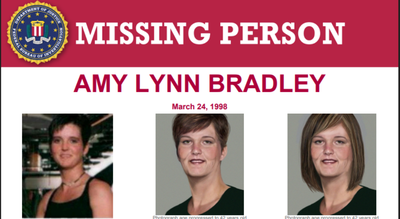
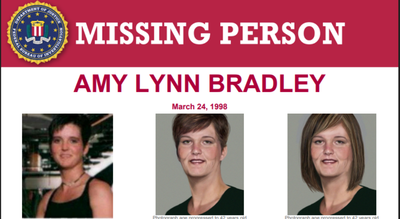
Nearly three decades after Amy Lynn Bradley vanished from a cruise ship in the Caribbean, US authorities are making a renewed push for answers. Last week, the Federal Bureau of Investigation announced a $25,000 reward for information leading to her recovery, or to the “identification, arrest, and conviction of the person(s) responsible for her death”.Interest in the case has never fully faded, sustained over the years by reported sightings across the Caribbean and the Bradley family’s long-held belief that she is still alive. That attention had surged again in recent years, particularly after the release of the three-part Netflix docuseries Amy Bradley Is Missing, which premiered on July 16, 2025. The series revisited the timeline, the witness accounts, and the inconsistencies that have lingered for decades.As part of its latest appeal, the FBI also released updated materials on its most wanted listings, including two age-progressed images of Bradley at around 42 years old, one depicting her with short hair and another with long hair, in an effort to reflect how she may appear today.
The night Amy Bradley vanished
Amy Bradley was 23 years old in March 1998, a recent college graduate and former Longwood College basketball player preparing to begin her first full-time job. She had boarded a seven-day Caribbean cruise aboard the Rhapsody of the Seas with her parents, Ron Bradley and Iva Bradley, and her brother, Brad Bradley. The ship was en route from Oranjestad, Aruba, to Curaçao.
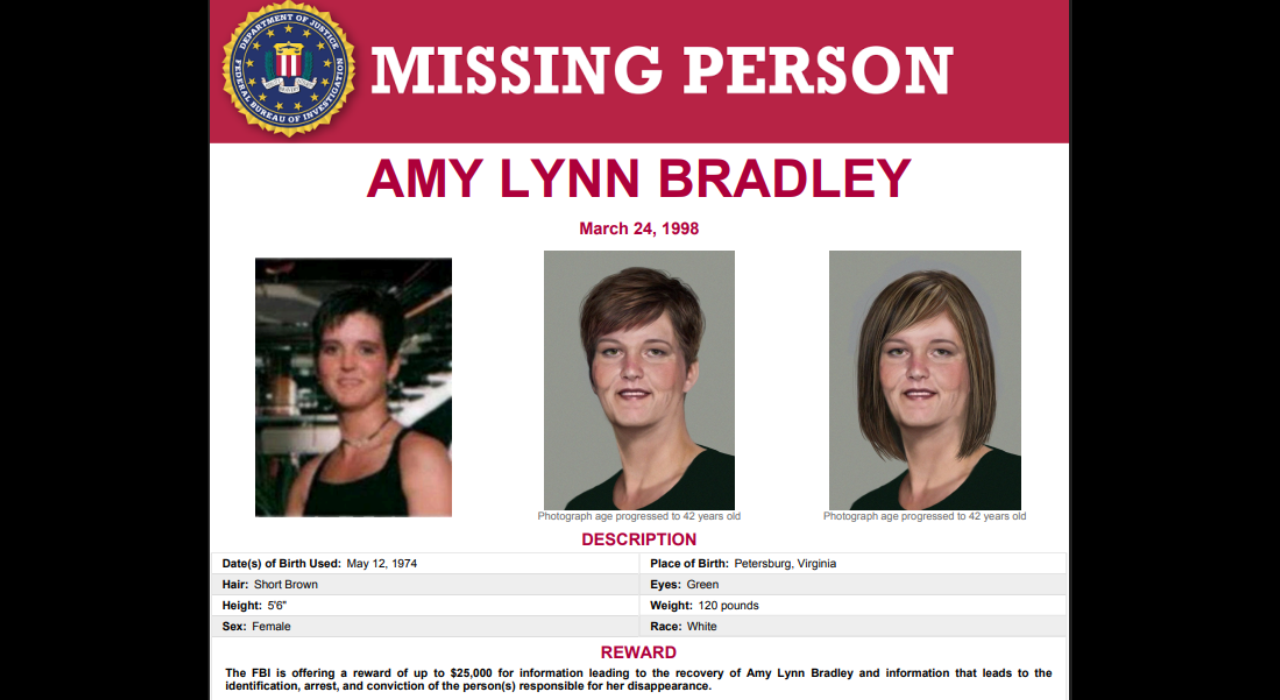
The FBI announced a new $25,000 reward for information on Amy Bradley’s disappearance, 28 years later/ FBI
On the night of March 23, Amy and her brother spent time at the ship’s nightclub with other passengers and crew before returning to their shared cabin in the early hours of March 24. At around 5:30 a.m., Ron Bradley woke and saw his daughter lying on a lounge chair on the cabin balcony. He later described seeing her legs from inside the room. When he checked again roughly 30 minutes later, around 6 a.m., she was gone. Amy had left behind the yellow polo shirt she had worn that night but appeared to have taken her cigarettes and lighter. There were no signs of a struggle.
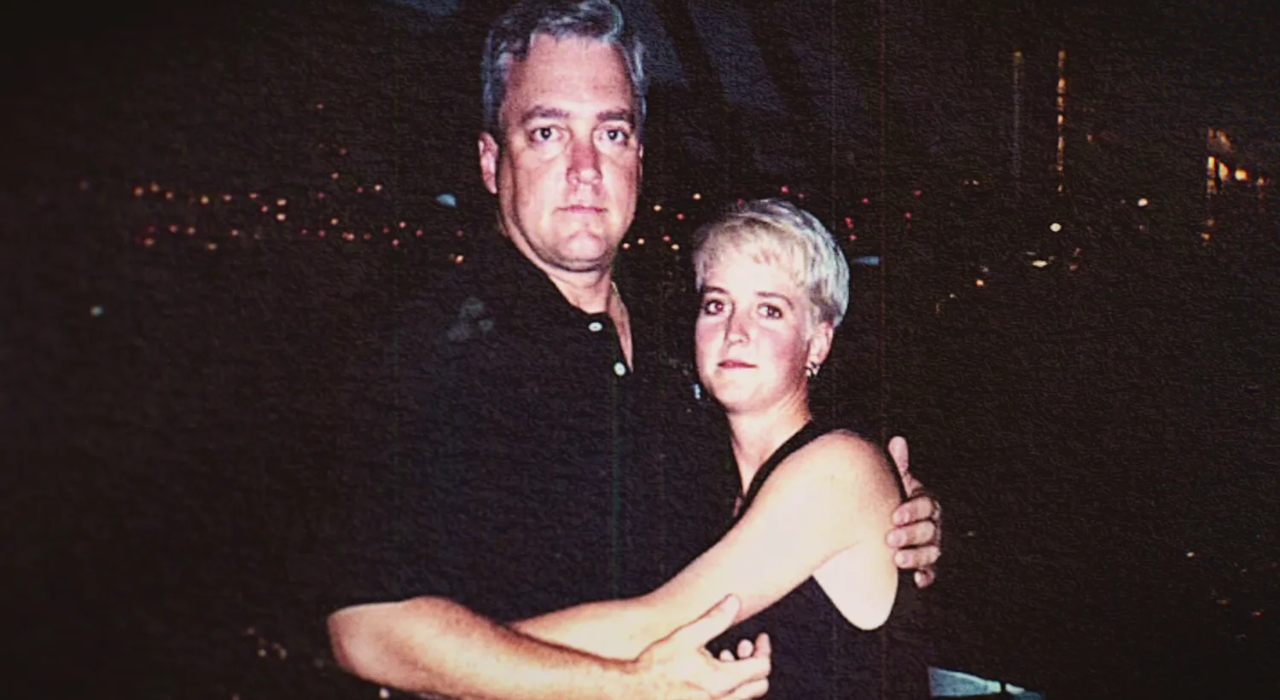
Ron Bradley was the last family member to see Amy, spotting her on the ship’s balcony early that morning./ (Ron and Amy Bradley)/ Netflix
Ron initially assumed she had gone to get coffee or take photographs as the ship approached Curaçao. When he could not find her, he searched the vessel for more than an hour before alerting his wife. The family then urged crew members to stop passengers from disembarking. “They begged” staff to seal the ship, Iva Bradley later told NBC News in June 2005, but the vessel docked as scheduled in Curaçao. Despite extensive searches, including coordinated efforts involving the US Navy, the Venezuelan Coast Guard and local authorities, no trace of Amy was found. As Henry Vrutaal of the Curaçao coast guard later recalled in the Netflix series, the conditions made it unlikely a body would simply disappear: “Because of the position of the boat, wind force, sea current and the wave height, the body would have washed up. But she was nowhere to be found.” Authorities at the time said they had no evidence of foul play.
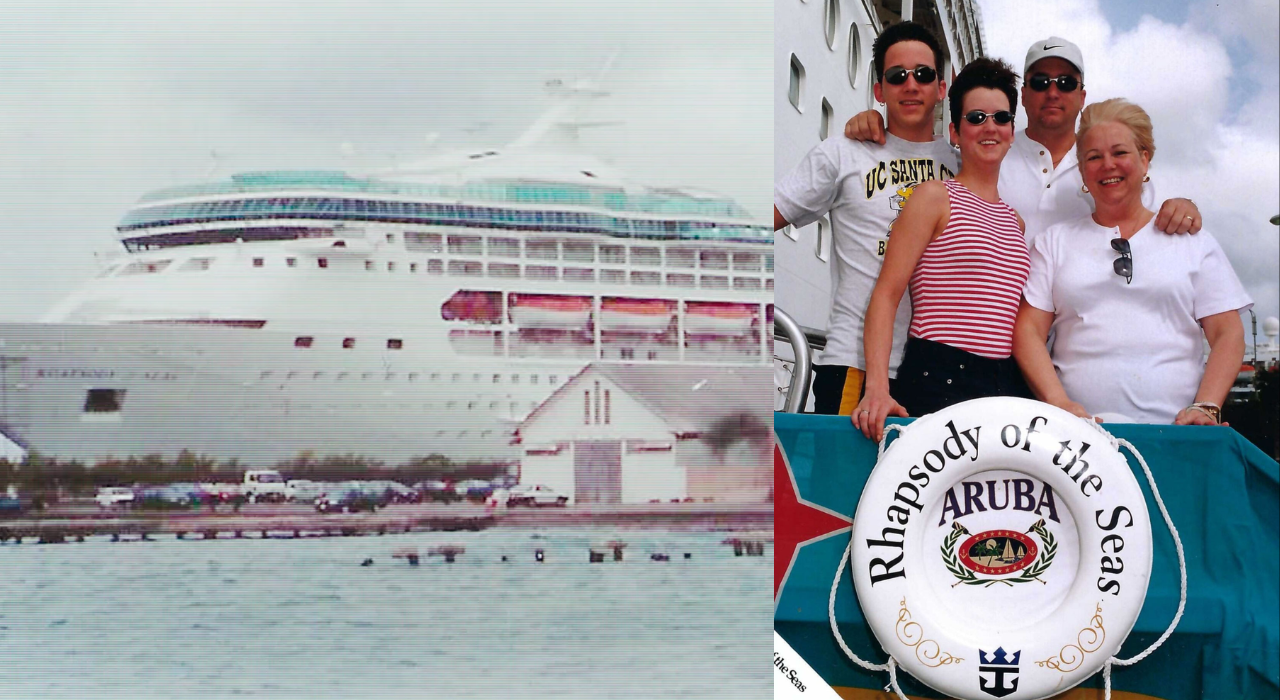
The ship was en route from Oranjestad, Aruba, to Curaçao/ Image: amybradleyismissing.com
Early suspicions and unanswered questions
From the outset, the circumstances raised questions that have never been resolved. Two passengers later claimed they saw Amy with a band member, Alister Douglas, also known as “Yellow,” a bassist in the ship’s band Blue Orchid, between 5 a.m. and 6 a.m., heading towards an upper deck. One said they later saw him alone. Douglas denied remaining with her, and authorities questioned him but found no evidence linking him to her disappearance. Still, Amy’s brother later recalled the musician expressing sympathy unusually early, before the news had widely spread. Another claim, revisited in the Netflix series, suggested a ship bartender may have heard a woman shouting: “Senorita kidnapped! Senorita kidnapped!” on the night she disappeared. That account surfaced years later and has never been independently verified.
Sightings across the Caribbean
In the absence of physical evidence, the case quickly became defined by reported sightings, many of them detailed, none confirmed.Within hours of the ship docking in Curaçao, a taxi driver told the Bradley family he had seen a woman resembling Amy running and trying to use a phone. Weeks later, when the family returned, her brother thought he heard Amy call his name from a passing van and briefly chased it, but when they caught up, “it ended up just being an old dude by himself,” Brad recalled on Amy Bradley Is Missing. In August 1998, a Canadian diver reported seeing a woman matching Amy’s appearance on a Curaçao beach. He said she had distinctive tattoos, including a Tasmanian devil, and appeared about to speak before being led away by two men after one stared at him “warningly”. Searches of the area yielded nothing. A year later, in 1999, a US Navy petty officer claimed he encountered a distressed woman in a Curaçao brothel who identified herself as Amy. According to his account, she said she had left the ship seeking drugs and had been unable to escape. He did not report the encounter until years later, after recognising her case in the media.In 2005, the family received anonymous photographs of a woman known as “Jas” on an adult website. An Federal Bureau of Investigation analysis concluded the woman in the images was likely Amy, but investigators were unable to trace the website’s IP address or identify the source. That same year, a tourist in Barbados claimed a woman approached her in a restroom and identified herself as Amy before disappearing again.For the family, these instances brought renewed hope that she may still be out there, even as none produced verifiable evidence and frustration persisted.
A family that never stopped searching
Amy Bradley’s disappearance did not end with the official search. In the weeks that followed, her family launched their own parallel investigation, hiring private investigators to board the cruise ship undercover, though no evidence was found. Over the years, they pursued leads across countries, consulted psychics, and offered a $260,000 reward.They first created an early website to gather information, later establishing amybradleyismissing.com as a more comprehensive hub for updates, reported sightings, tip submissions, and an archive of case materials, news coverage, and media appearances., and as a record of a case they have refused to let go cold.What has remained consistent over the years is the family’s position and the conviction behind it. They have repeatedly rejected the idea that Amy fell overboard or took her own life, maintaining that she was not suicidal and would not have jumped from the ship. Instead, they believe she was taken.“We believe she was targeted, we believe she was taken, and we believe she was removed from the ship,” her brother, Brad Bradley, said—reiterating the same view again in an interview last month, on NewsNation’s Missing series with Marni Hughes.
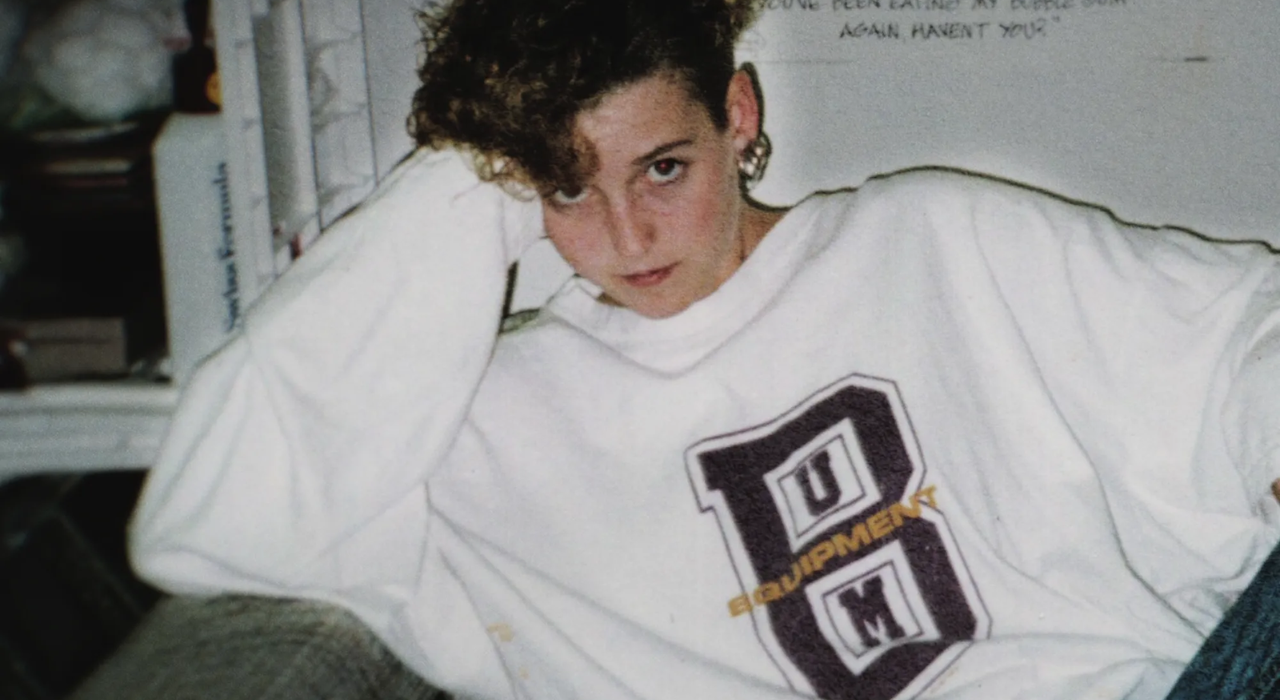
Amy Bradley remains missing, and her case stays open, with family and authorities continuing the search/ Image: Netflix
That belief is sustained, in part, by the absence of closure. Speaking to NewsNation last month, Brad reflected on the passage of time without resolution, saying, “The hope doesn’t go away. As unrealistic as it may be to some people, it’s possible that she’s still alive and still out there,” adding, “We’re coming up a month away from 28 years from Amy’s disappearance, and we continue to hope against hope.” Her parents, Iva Bradley and Ron Bradley, have expressed the same belief, often in more personal terms. In the Netflix docuseries Amy Bradley Is Missing, Iva described how that hope shapes their daily life: “We will never give up on her. In the morning, when we wake up, we say, ‘Maybe today.’ And then when we get ready to go to bed at night, we have a special little kiss for Amy, and we say, ‘Maybe tomorrow.’” Ron, in the same series, spoke about holding onto the idea of her return in quieter, practical ways, explaining that he has kept her car ready: “It’s going to be pristine when she gets here, and then she’ll get to drive it again.” For Brad, the uncertainty itself has become part of how the family endures the case. In a separate interview with WWBT’s 12 On Your Side in July 2025, he said, “The lack of closure or not knowing allows us to continue to hope, so I actually prefer it that way.”
Theories that still divide the case
Investigators and observers have proposed multiple explanations over the years. Some suggest Amy may have accidentally fallen or jumped overboard, though no body was ever recovered despite extensive searches of the waters between Aruba and Curaçao.Others believe she was abducted, possibly drugged, removed from the ship, and trafficked into Caribbean sex rings. This remains the theory her family strongly supports, reinforced by the various reported sightings. A third possibility is that she left voluntarily and started a new life, a theory occasionally cited in connection with unexplained online activity and sightings. None of these explanations has been proven. Today, Amy Bradley would be 52 years old. Her disappearance remains one of the most enduring unsolved cases linked to a cruise ship, an open case that continues to move between evidence and belief, between reported encounters and unanswered questions. The FBI’s investigation into the case remains ongoing. The FBI’s renewed appeal has not changed the central reality of the case: there is still no definitive account of what happened in the early hours of March 24, 1998. What remains, after 28 years, is a family still waiting, and a case that has never reached a conclusion.