
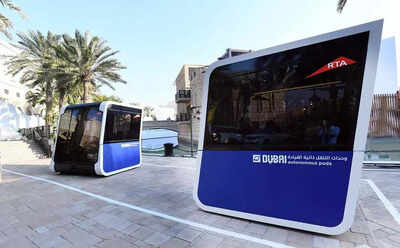
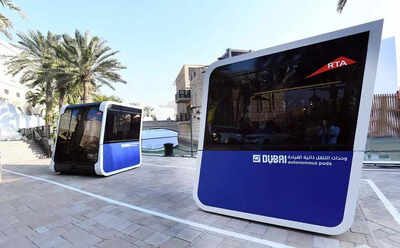
Traffic congestion in Dubai may soon become a thing of the past. At the World Governments Summit 2026, the Roads and Transport Authority (RTA) officially unveiled Glydways, a groundbreaking autonomous transit system designed to glide above or alongside existing roads. These small, sleek, self-driving electric vehicles operate on dedicated narrow tracks, ensuring they never get stuck in traditional gridlock. Mark Seeger, CEO of Glydways, confirmed that the service is expected to begin its first phase of operations within the next four months, marking a major milestone in Dubai’s goal to make 25% of all trips autonomous by 2030.
What are Glydways driverless pods?
Each pod can carry four to six passengers and runs without a human driver, using advanced sensors, cameras and automated control systems to navigate safely. According to Dubai’s Roads and Transport Authority (RTA), the system is designed for on-demand travel, meaning passengers can board pods when needed rather than wait for fixed schedules.The pods are capable of reaching speeds of up to 50kmph and can travel long distances on a single electric charge, making them suitable for linking metro stations, residential districts, tourist areas and business hubs. Because the vehicles are electric, the system produces zero direct emissions, supporting Dubai’s sustainability and smart-city goals.Officials have said Glydways is especially focused on solving the “last-mile” challenge — the short but often inconvenient journey between public transport stations and final destinations. By filling this gap, the driverless pods aim to make public transport faster, more convenient and more attractive for daily commuters and visitors alike.
First four routes
The RTA has already mapped out the initial rollout, focusing on some of Dubai’s busiest commercial and tourist hubs. These routes are specifically chosen to bridge the “last-mile” gap between Metro stations and major landmarks:
- Bluewaters Island: Connecting the National Paints Metro Station directly to the vibrant Bluewaters district.
- Umm Suqeim: Linking the Mall of the Emirates Metro Station with the iconic Madinat Jumeirah.
- Al Quoz Corridor: A new link from the OnPassive Metro Station to the cultural hub of Alserkal Avenue and Times Square Centre.
- Dubai Festival City: An internal network within the area, with future plans to link directly to the upcoming Metro Blue Line.
With Glydways and other autonomous initiatives continuing to gain momentum, Dubai is positioning itself as a global leader in smart urban mobility. By investing in technologies that reduce travel time, cut emissions, and broaden access to efficient transport, the emirate is not just building infrastructure, it’s shaping a new era of connected, driverless cities that others may soon follow.The RTA has also ensured the system is inclusive, with pods designed to comfortably serve seniors and people of determination. As His Excellency Mattar Al Tayer, Director-General of the RTA, noted, the integration of smart mobility like Glydways and Air Taxis (slated for late 2026) is about more than just technology, it’s about enhancing the quality of life for every resident and visitor in the world’s most future-ready city.