
Why astronauts may face a hidden blood clot risk in space |

As we explore more of the universe, the physical impacts of living in microgravity continue to be one of the primary obstacles to long-term space travel. Research on Assessment of Jugular Venous Blood Flow Stasis and Thrombosis During Spaceflight suggests that astronauts may face a potential “silent” risk of developing Venous Thromboembolism during long-duration space…

Read More

South America, Africa and Europe were once connected by land routes: 120-million-year-old dinosaur fossil reveals ancient bridge |

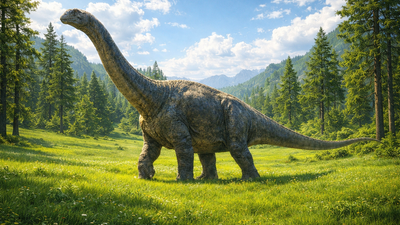
A newly identified dinosaur fossil from Brazil is offering fresh clues about how ancient animals once moved across continents that are today separated by vast oceans. The remains belong to a previously unknown species of giant long-necked dinosaur that lived around 120 million years ago during the Early Cretaceous period. What makes the discovery particularly…

Read More

‘Caulocera Hollowayi and Asura Buxa’: Indian scientists discover two new lichen moth species |

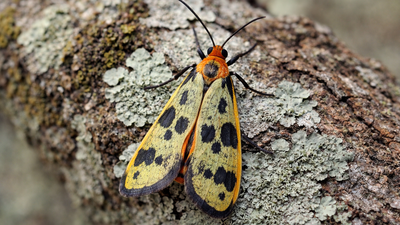
An AI-generated representative image Union environment minister Bhupender Yadav said on Saturday that scientists from the Zoological Survey of India (ZSI) have discovered two previously unknown species of lichen moths.In a post on X, the minister described the findings as “a vital contribution to the documentation of India’s moth biodiversity,” and said the discovery highlights…

Read More

Inside Chrysalis: This 36-mile generational starship could keep 1,000 humans alive for 250 years beyond the Solar System |

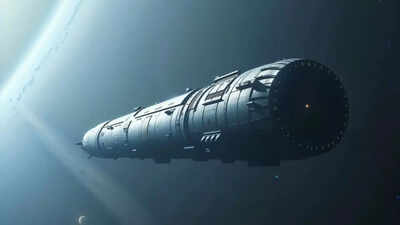
Source: Discover Magazine The proposed interstellar spacecraft, called Chrysalis, can carry 1,000 people on a one-way trip into interstellar space. It was proposed as part of the Project Hyperion Design Competition. The idea behind this spacecraft is that it could be a generational vessel capable of sustaining human life for centuries. This is different from…

Read More