
Earth in danger! 60% of global land now beyond safe ecological limits, scientists warn |

Human activity has driven Earth’s natural systems dangerously close to collapse. A new study reveals that 60% of the planet’s land is now outside the safe operating zone required to maintain stable ecosystems. This loss of biosphere integrity, caused largely by deforestation, agriculture, and industrial expansion, threatens food security, water supplies, and the climate. Scientists…
Read More

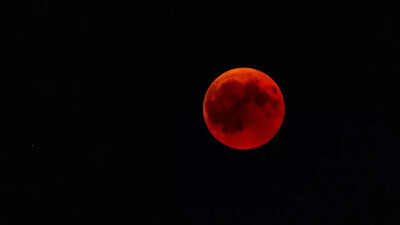
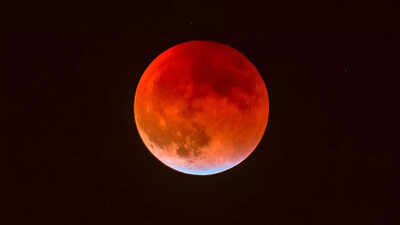
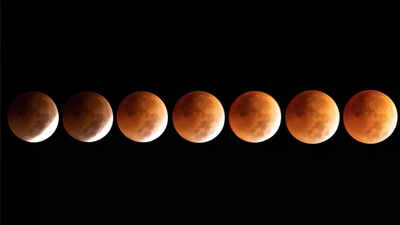
Total lunar eclipse 2025 lights up the night sky with a rare red Moon spectacle; here’s when and where to watch the next ‘blood moon’ in the US |

Lunar eclipses have captivated humanity for millennia, combining science, mythology, and awe-inspiring beauty in a single celestial event. Among these, the total lunar eclipse—commonly called a “blood moon”—stands out for its dramatic transformation of the Moon’s surface from silvery white to fiery red. Unlike solar eclipses, which require eye protection, lunar eclipses can be safely…

Read More

Scientists discover how Earth’s interior took shape in its first 100 million years |

Scientists have discovered fascinating new insights into what Earth looked like before it was fully formed. A study led by Charles-Édouard Boukaré, physicist at York University, reveals that our planet’s essential features were established within its first 100 million years. Published in Nature, the research combines geochemistry with advanced computer simulations to show how Earth’s…

Read More

Unbelievable discovery: Queen ants produce offspring of two different species, say scientists |

In a discovery that sounds almost like science fiction, scientists have found that queen ants of the Iberian harvester species (Messor ibericus) can produce offspring not just of their own kind but from an entirely different species. This rare phenomenon, called xenoparous reproduction, has never been observed before in the animal kingdom. Essentially, these queens…

Read More

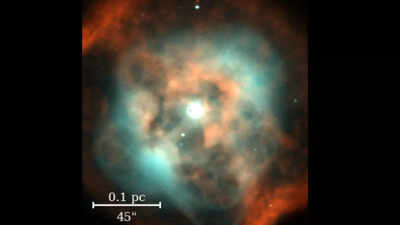
James Webb Space Telescope reveals ghostly dust rings: This “dead” star surprises astronomers |

The James Webb Space Telescope (JWST) has captured astonishing new images of the planetary nebula NGC 1514, unveiling ghostly, infrared-bright rings around a dying star system located approximately 1,500 light-years from Earth. These structures, seen in unprecedented detail, provide astronomers with an extraordinary glimpse into the complex history and evolution of this stellar remnant.The findings,…

Read More