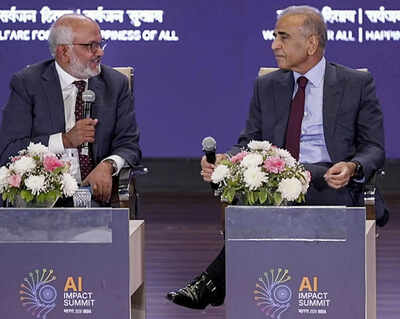
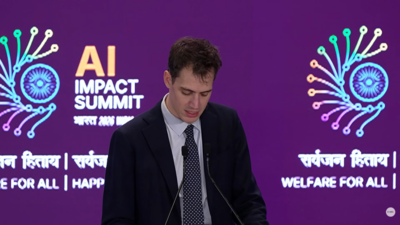
New Delhi: Warning about concentration risk from a few companies dominating AI, Arthur Mensch, co-founder and CEO of Mistral, said India should support open-source models and collaborate with global startup labs and researchers to maintain strategic autonomy and ensure the country benefits from AI-driven productivity and economic growth. Speaking at the India AI Impact Summit on Thursday, he said, “AI will contribute significant double-digit growth to GDP in the coming years. It is critical that everyone has access to the on and off switch to ensure business continuity and that countries are not dependent on external providers who can effectively shut off access. The global AI landscape is rapidly evolving and is highly focused on control, surveillance and leverage. Countries need a future grounded in openness, trust, and autonomy. It is a fundamental right for countries to own their AI destiny. This is crucial for preserving digital autonomy and shaping our own future.” He also argued that the leverage of larger players must be curbed, noting that India’s market size gives it the power to build a different pathway for AI progress. Mensch, a key figure in the French AI startup ecosystem and one of the few competing in large language model development, said open source is not a radical idea, pointing out that it underpinned the internet and cloud computing. As of Sept last year, the French AI startup was valued at nearly $14 billion. “Today we are facing a dichotomy between open source, where a few companies like Mistral compete, and models developed by large private corporations that are using them as leverage.” He called for collaboration to build better open-source AI, especially for low-resource languages, with a special focus on India’s 22 official languages. “Our key goal is to ensure that more languages are properly represented in these models. To do this, Mistral works with local ecosystems and labs that can help acquire and curate high-quality text and speech data in these languages. The idea is that by feeding this diverse content into open-source models, they become more accurate and useful for local populations, not just English-speaking users.“