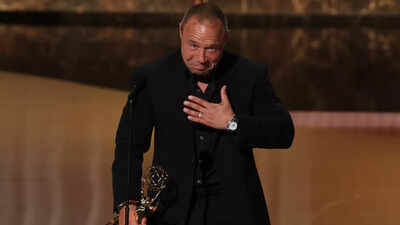
Stephen Graham walked away with two trophies from The Emmy Awards, including the award for Lead Actor in a Limited or Anthology Series or Movie for his role in Netflix’s hit drama ‘Adolescence’. While his heartfelt speech has struck a chord with people across the globe, it is also time to acknowledge that the actor-creator hasn’t had it easy.
Back in 2019, during a Bafta Sessions panel, Graham revealed that he had dyslexia. “I’m dyslexic, so I struggle,” Graham said. “My missus actually reads the script and says whether or not I’m doing it. She’s made some good choices.” Let’s take a look at what dyslexia is and its symptoms. What is dyslexia?
Dyslexia is a lifelong learning disability that affects one’s ability to read, spell, and process written language, despite conventional instruction, adequate intelligence, and sociocultural opportunity.The symptoms of this learning disorder usually appear when children learn to read. According to the American Brain Foundation, such children may struggle to retain language, remember the symbols for certain sounds, and understand the grammar and syntax needed to communicate in writing, while in school. Though this condition is often recognised while in elementary school, it can happen to anyone at any time in life. It is the most common learning disorder, and occurs in populations across all languages.It is important to understand that this condition has nothing to do with one’s intelligence, hearing, or vision. Children with this condition can succeed in school with tutoring or a specialized education program. As there is no cure for this condition, it is important to catch it early and make necessary interventions in life for the best outcomes.
What are the symptoms of dyslexia?
The signs and symptoms of dyslexia are difficult to recognize, prior to he child joins school. However, some early hints may appear in some. These signs and symptoms also differ from child to child.Symptoms that appear before school include:
- Late talking
- Slow in learning new words
- Trouble with forming words correctly, such as reversing sounds in words or confusing words that sound alike
- Trouble remembering or naming letters, numbers, and colors
- Difficulty learning nursery rhymes or playing rhyming games
Symptoms in school-going children include:
- Reading skills are below the expected level for that age
- Trouble processing and understanding what is heard
- Struggle to find the right word or form answers to questions
- Trouble remembering the sequence of things
- Difficulty seeing (and occasionally hearing) similarities and differences in letters and words
- Struggle with spelling
- Difficulty in pronouncing an unfamiliar word.
- Needing a long time to complete tasks that involve reading or writing.
- Avoiding tasks that involve reading.
In teens and adults, the symptoms include:
- Difficulty reading, including reading aloud
- Avoiding activities that involve reading
- Struggling to read and write
- Problems spelling
- Mispronouncing names or words, or problems retrieving words
- Need an unusually long time to complete tasks that involve reading or writing
- Trouble summarizing a story
- Trouble learning a foreign language
- Difficulty doing math word problems
What are the causes?The exact cause of dyslexia is unclear; however, certain factors are tied to it. Genetics is one. According to research, a number of inherited genes may predispose someone to develop this brain disorder. Low birth weight, being born premature, and exposure to substances during gestation that affect brain development are some other risk factors.