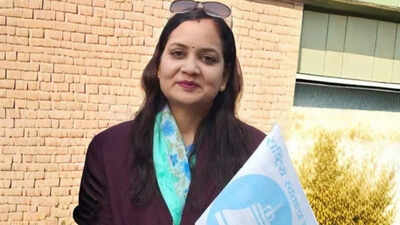
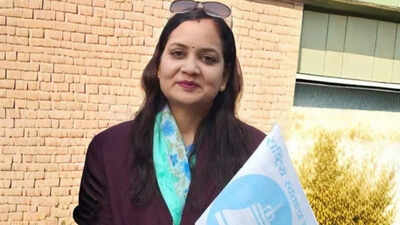
NEW DELHI: In the wards of AIIMS Delhi, Nisha Mehta trained as a nurse. Today, she stands at the helm of Nepal’s healthcare system. An alumna of the institution’s College of Nursing (2006–2010), Mehta’s appointment as Nepal’s health minister is seen as a milestone not just for the facility but for the entire nursing profession.Those who knew her as a student recall a personality that did not seek attention, but stood out nonetheless.Dr Latha Venkatesan, principal of her alma mater, said that Mehta was an active and well-rounded student, balancing academics with co-curricular activities while handling responsibilities with ease. She was organised, dependable and had strong interpersonal skills.
Teachers recall Mehta’s early leadership traits
Nisha Mehta had a natural ability to coordinate and represent, reflecting leadership qualities even then,” Dr Latha Venkatesan, principal of her alma mater, said, though noting that Mehta was not politically active during her student years.Former institute principal Dr Manju Vatsa remembers the student differently — quieter, reserved, but remarkable.“Nisha Mehta was a very serious and highly intelligent student, efficient in her work and studies,” she said, adding, “Her discipline and focus stood out.”There were no clear signs then that the Nepal health minister had a future in politics. She was not among the outspoken students.Yet, educators say her journey reflects something deeper — the power of consistency, discipline and professional grounding.Her rise from a nursing graduate to a national policymaker signals a broader shift in how healthcare leadership is evolving in Nepal.Nurses, often at the frontline of patient care, possess an understanding of health systems and their potential to shape policy.For AIIMS, this is a moment of pride. For the nursing community, it is one of validation. And for young students, it is a reminder that leadership does not always begin loudly — sometimes, it starts quietly, in classrooms and hospital wards, long before the world notices.