
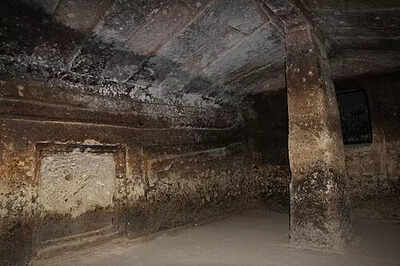
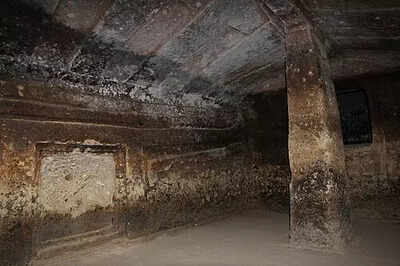
In the rugged heart of Sardinia, Italian archaeologists have excavated three ornately decorated underground tombs, known as the Domus de Janas, or “houses of the fairies.” These 5,000-year-old subterranean tombs, buried beneath centuries of earth and hidden near the famous Sant’Andrea Priu tombs, were once home to the Neolithic population, who believed the afterlife was similar to the here and now. This discovery brings the total number of tombs found on the site to an increased count and provides a unique insight into the prehistoric burial practices of the island, 18 domus de janas, which in July 2025 were recognised by UNESCO as a collective World Heritage Site.
What are the ‘fairy houses ’ in Italy
The Domus de Janas are small, beehive-shaped rooms carved directly into the rock, sometimes accessible via short tunnels, which lead into one or more rooms. In Sardinia, these are called the “houses of the fairies” or the “houses of the witches,” based on the oral history of the island, which has long described these small caves as the homes of magical creatures rather than burial sites. In the rooms, many of the Domus de Janas display carved bench space, as well as symbolic designs such as spirals, bull horns, and false doors, which researchers believe provide insight into the beliefs of the ancient Sardinians concerning the journey of the soul.As the BBC reports, modern archaeology has classified the Domus de Janas as essential evidence of the burial practices of the Neolithic period, as well as the beginning of the Copper Age, spanning the period from approximately 3400 to 2700 BCE. The small, intimate nature of the structures has led researchers to believe that the ancient Sardinians believed the afterlife would be a continuation of the present, with the deceased living on in their own homes, carved into the rocky ground. Sardinian heritage experts have sought to assure the public that the Domus de Janas are, indeed, far from myth, as they provide real evidence of the ancient Sardinians’ ritual practices.
The new discovery at Sant’Andrea Priu
Three recently discovered Domus de Janas have been unearthed as part of a wide-ranging program in the field of cultural heritage, which is being sponsored by the Italian Ministry of Culture. The program is designed to improve facilities and excavate the Domus de Janas in the Meilogu area of northern Sardinia. At the Archaeological Complex of Sant’Andrea Priu in the town of Bonorva, the team had previously identified several tombs in the area but had been spurred on to resume their work due to slight inconsistencies in the terrain between two known hypogea.What they discovered was a series of three underground tombs in remarkably good condition, still showing signs of the paint and adornments that had been placed within the tombs as a matter of ritualistic care and attention. One of the tombs, dubbed the as-yet-named Tomb XX, is particularly intricate in its design and contains seven chambers and over thirty pieces of Roman-era artefacts, including jugs, plates, and oil lamps, suggesting that the site had been held in great regard in later years as well. The Italian authorities have noted that the architectural style is in keeping with the prehistoric tombs that have been discovered in the island and that the discovery is set to significantly add to our knowledge of the early history of human habitation in Sardinia.
Why these 5,000‑year‑old tombs matter today
The Domus de Janas are not simply pretty caves with carvings, but rather a part of a broader prehistoric history, which includes nuraghi towers, stone settlements, as well as vast necropolises. In fact, UNESCO recognised a string of Sardinia’s ancient stone structures as of 2025, which highlights the idea that these sites, taken together, help us understand the history of the island prior to the Romans or any other more recent occupation of Italy. To the local archaeologists, the unearthed tombs provide a level of depth to the history of the island, including the way burials were conducted over the course of history, as well as the way social groups used the same sacred spaces.Experts involved with the Sant’Andrea Priu Project have publicly stated the fact that the Domus de Janas recharted the map of recognisable funeral sites in central Sardinia, proving that, even after two centuries of sporadic excavations, there were still many secrets left to be uncovered. An archaeologist, as quoted in the Italian Ministry of Culture, referred to the hypogea as the “silent dwellings of an ancient world, where the careful positioning of the bodies and objects reveals the depth of the community’s sense of the universe.” The combination of the ancient Sardinian carvings, as well as the more contemporary Roman artefacts, also serves as a reminder of the way reverence can transcend even the passage of thousands of years, as the world itself continues to evolve.
From fairy tale to heritage: how Sardinia keeps the past alive
‘Fairy houses’ is a term that sounds rather magical and storybook-like, but in Sardinia, it’s already become a reflective challenge to consider how we might view the actual archaeology behind the legend. The Domus de Janas are ready to roll out the welcome mat for tourists and locals alike once restoration and safety work are completed, transforming these sites into an open-air history book you can walk through. Guides and historians are working on materials that connect the actual doors and benches carved into the rock to the \Neolithic inhabitants and their beliefs and practices, making these 5,000-year-old chambers feel less like relics and more like ancestral rooms just reopened to us.For both tourists and locals, the rediscovery of these hidden rock tombs is also a reminder that beneath our Sardinian surface, there is another world: stone houses, quiet hallways, and symbols that have been part of our identity for millennia. These “fairy houses” are not a retreat from history but rather its most intimate record, carved directly into the rock beneath our feet.