On an average school morning somewhere in the world, a young teacher stands in front of her students, lesson plan in hand. On her laptop screen, an artificial intelligence program offers her ideas for teaching a concept. Later in the day, in the teachers’ room, an experienced educator offers her advice. And in the evening, the same teacher wonders if she has the energy for this kind of pace for the rest of her life. This tension of opportunity and pressure is the heart of the Teaching and Learning International Survey (TALIS) 2024. The survey has provided information based on the responses of 280,000 teachers and principals in 55 education systems. The survey’s findings are not just statistics. They are the story of teachers’ responses to the impact of technology, the challenges of early career teachers’ stress, and the question of stability in the teaching profession. At its core, TALIS 2024 raises an urgent question: What does it mean to teach in an era of rapid change?
Artificial Intelligence finds a place in the staffroom
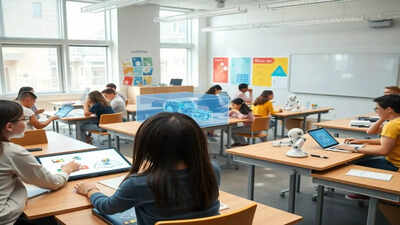
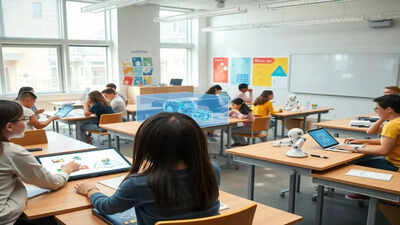
In many classrooms today, artificial intelligence is no longer a distant concept. Teachers are experimenting with it for lesson planning, assessment support, and administrative tasks. Yet the survey shows that the embrace of AI varies sharply across countries.According to the OECD report, Singapore and the United Arab Emirates are among the leaders, with around 75% of teachers reporting that they use artificial intelligence in their professional work. What distinguishes these systems is not simply access to technology but preparation. Teachers there are also among the most likely to report formal professional learning in the use of AI.The connection is telling. When educators are properly trained, they are more inclined to use new technologies in the classroom. When guidance is lacking, there is curiosity but not confidence. The OECD’s message is one of measured tones rather than celebration. The report says that schools must also investigate the benefits of AI, as well as protect children from potential harms, such as the spread of misinformation, biases in algorithms, or over-reliance on automated responses.” For teachers, the arrival of AI is a mixed bag. It brings promises of efficiency, but also challenges to authority, trust, and learning.
The steep learning curve of the first years
If technology represents the profession’s newest challenge, the experience of young teachers remains one of its oldest.Ask educators about their first year in the classroom and the responses are rarely calm recollections. Many describe it as overwhelming, an abrupt shift from theory to the daily responsibility of guiding dozens, sometimes hundreds, of students. TALIS data confirms how decisive those early years can be.Teachers who receive mentorship from experienced colleagues report higher levels of job satisfaction and well-being, according to the OECD findings. A mentor can help translate training into practical decisions, such as how to maintain classroom discipline, how to support struggling students, how to balance workload without exhaustion.Yet the survey also reveals a structural contradiction inside many education systems.Teacher placement often follows seniority-based rules, giving experienced teachers greater freedom to choose where they work. The unintended result is that novice teachers frequently begin their careers in the most demanding schools or classrooms.In practical terms, the profession sometimes sends its least experienced members into the environments that require the greatest resilience.For policymakers concerned about teacher shortages, this pattern raises uncomfortable questions. Early stress has long been recognised as a major reason teachers leave the profession. Placing beginners in the toughest roles may only intensify that risk.
Why teachers stay and why they leave
Public debate about teacher shortages often returns to a familiar explanation: Pay. TALIS 2024 suggests the reality is more complex.The OECD’s findings show that employment conditions can influence career decisions as strongly as salaries. Teachers repeatedly highlight issues such as contract stability, access to full-time positions, and the overall climate within their schools.These factors shape whether teaching feels like a sustainable profession or a temporary commitment.High turnover, the report warns, carries consequences for students as well. When teachers leave frequently, schools lose institutional knowledge, and students lose the continuity that supports effective learning. In other words, teacher retention is not merely an employment issue, it is an educational one.
The policy challenge ahead
The scale of the TALIS survey makes it one of the most important diagnostic tools available to governments. By collecting the perspectives of hundreds of thousands of educators, it offers policymakers an opportunity to see classrooms not through theory but through lived experience.The 2024 findings point to several priorities: responsible integration of artificial intelligence, stronger support systems for early-career teachers, and employment frameworks that encourage stability in the profession.Behind these policy debates lies a deeper truth. Teaching has always required resilience, patience, and intellectual curiosity. Today, it also requires adaptability in the face of technological and institutional change.The TALIS report does not present dramatic conclusions. Instead, it offers something more valuable: a collective voice from classrooms around the world.And that voice carries a clear message. If education systems expect teachers to lead the next generation through a rapidly changing world, they must ensure that the profession itself remains strong, supported, and worth choosing.