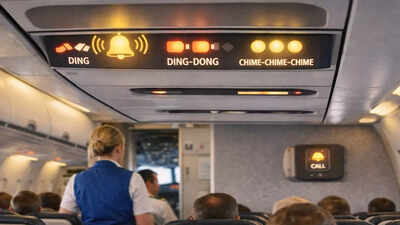
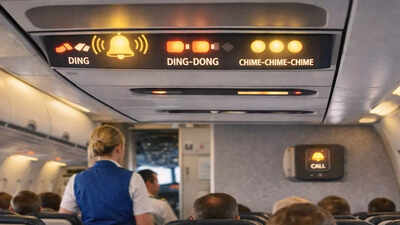
Anyone who has travelled by air has heard it at least once. The calm cabin suddenly fills with a short “ding” sound that seems to come from nowhere. Sometimes it happens just after take-off, sometimes in the middle of the journey, and sometimes just before landing.For many passengers, the sound feels mysterious. Some travellers assume it is a warning or an alert about something happening with the aircraft. Others simply ignore it because they hear it so often during a flight.In reality, the familiar chime is part of a quiet communication system used inside aeroplanes. The sounds help pilots and flight attendants coordinate activities throughout the flight without constantly making announcements to passengers.According to guidance from the Federal Aviation Administration, aircraft crews are trained to use flight-deck and cabin chimes along with interphone signals for routine communication between pilots and cabin crew during normal and emergencies.
Why do aircraft use chimes as communication signals
In an aircraft, communication is always fast and efficient. The flight crew is mostly distributed in different places in the cabin, and the pilot is in the cockpit. This has made airlines use sound to communicate instantaneously.The short chime is a coded communication between the cockpit and the flight crew in the cabin. Rather than calling over a speaker to inform them of a change in circumstances, a pilot can send a chime to inform them of a change in circumstances.This ensures that there is a peaceful atmosphere in the cabin for the passengers while at the same time keeping everyone informed. The chime is loud enough to be heard by everyone in the cabin but soft enough not to scare anyone.
What a single chime usually indicates
The most common sound heard during a flight is a single “ding.” Passengers often hear it when the seatbelt sign turns on or off.For example, shortly after take-off, the captain may switch off the seatbelt sign once the aircraft reaches a safe cruising altitude. The chime alerts passengers to this change and lets them know they can move around the cabin if needed.Another reason for the single chime is the passenger call button. When someone presses the button above their seat to request help, a light appears above the seat, and a short sound alerts the flight attendants.Most of the time, a single chime simply reflects routine activity in the cabin.
What a double chime means during a flight
A two-tone chime, which is often heard as “ding-dong,” is usually used for indicating a transition in flight. This sound is often used when there is a change in altitude or when the plane is in another phase of flight.For instance, when the plane rises above a certain altitude after taking off, the cockpit may use two chimes to indicate to the crew that it is okay for them to start serving passengers. This is often used to let the crew know it is okay for them to stand and start serving passengers’ food and drinks.Another instance where the crew may hear two chimes is when the plane is descending towards its destination. This is often used to let the crew know that it is time for them to start securing the plane and preparing for landing.
What repeated chimes may signal
On other occasions, there may be several chimes that happen one after the other. For instance, there may be a need to attract the crew’s immediate attention to a given issue.For example, pilots may use multiple chimes to alert the cabin crew of any turbulence ahead. In such cases, the crew may immediately stop services and prepare to face turbulence before it hits the plane.However, it is essential to understand that not all instances of multiple chimes indicate anything is going on. Different airlines use different internal systems to operate. In most cases, such alerts may only be relevant to the crew’s internal procedures.A passenger may be aware of the sound, but it is usually meant for the crew operating inside the aircraft.
The quiet system behind a smooth flight
While it may seem mysterious, it is simply a component of the plane’s internal communication language. It is a series of chimes that help pilots and flight attendants work together without bothering anyone else on board.Seatbelt reminders, serving meals, and a host of other small chimes are all components of a smooth flight.So, the next time you hear that familiar “ding” when you are cruising at 35,000 feet, there is rarely anything to worry about. It is simply another component of the many quiet systems that work behind the scenes to help you enjoy a smooth and safe flight.