

NEW DELHI: The conflict in West Asia, along with disruption in supply chains and higher oil prices may result in India’s growth being hit by 15-40 basis points (bps) next financial year (2026-27), with inflation too expected to accelerate if the tension persists for a few more weeks, economists said.Rajani Sinha, chief economist, CARE Ratings said that if oil prices remain elevated in the range of $100-120 for the full year, with no end to the conflict in sight, it might shave off up to 40 bps from the GDP growth to 6.8% (100 basis points equal a percentage point).“Impact on retail inflation is contingent on whether increased fuel prices are passed on to the consumers. Govt will make all efforts to keep them unchanged, and oil companies too can bear the cost to an extent. Inflation may cross the 5% mark in FY27 from our current estimate of 4.3%,” said Sinha.
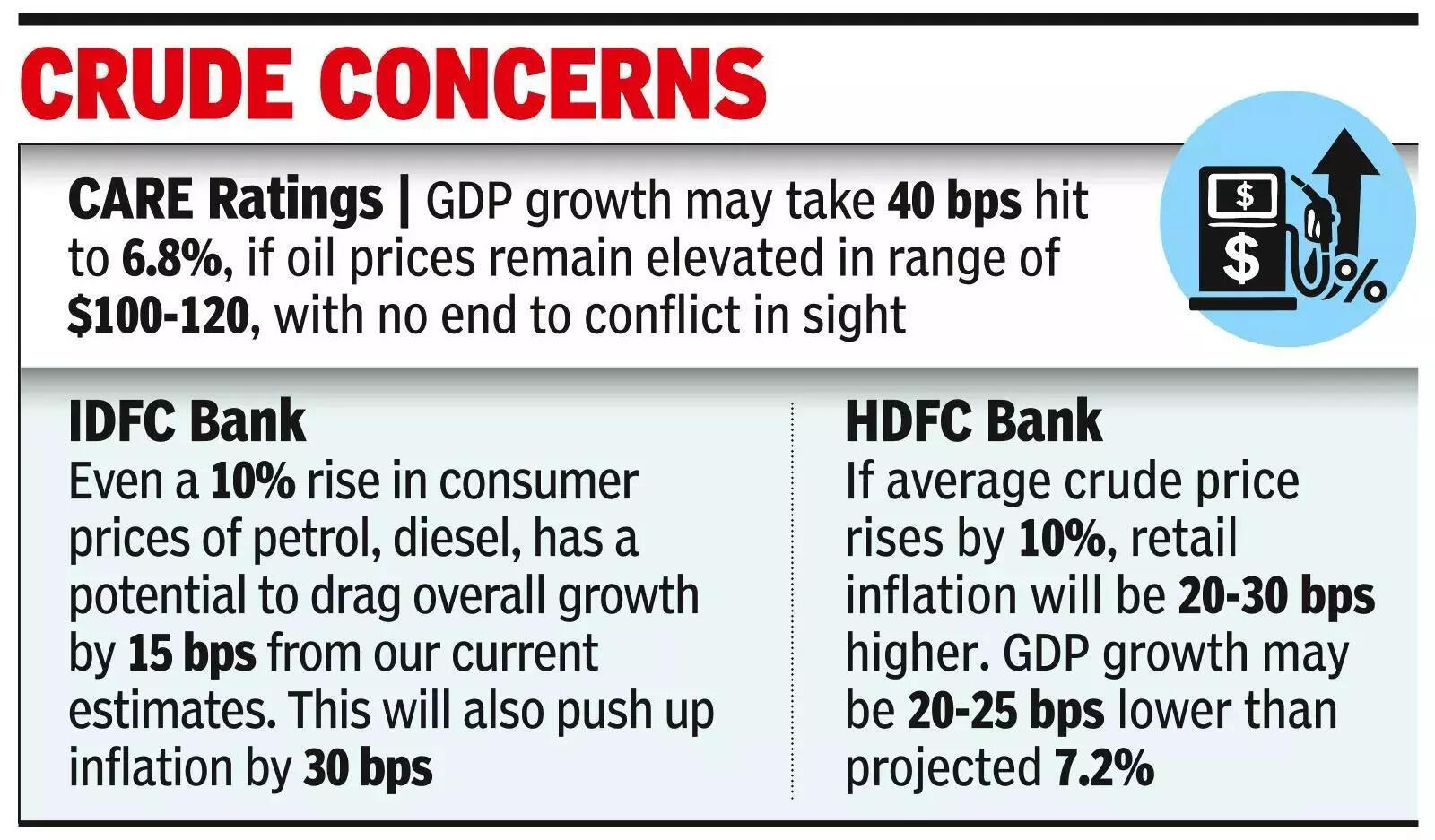
IDFC Bank chief economist Gaura Sengupta said that market prices for petrol and diesel are likely to remain unchanged in the short-term and oil retailers will have to bear the brunt of the disturbance. “In our assessment, even a 10% rise in consumer prices of these important commodities, has a potential to drag overall growth by 15bps from our current estimates. This will also push up inflation by 30bps. Higher gold prices are expected to fuel core inflation though,” she added.After the latest GDP estimates, chief economic adviser V Anantha Nageswaran on Feb 27 had raised the growth forecast for FY27 to 7-7.4%. The Economic Survey tabled in Parliament in Jan has projected headline inflation for first and second quarters of FY27 at 3.9% and 4%, respectively. Bank of Baroda chief economist Madan Sabnavis says he is estimating a 40-50 bps rise in inflation, arguing that disruption in supply chains and high fuel cost will lead to surge in the input costs. “As of now, oil prices are highly volatile. Prolonged volatility and subsequent price transmission may push inflation up to 4.5%. This takes away any room for any further rate cuts and RBI is expected to keep the policy rate unchanged for the next fiscal,” he said.Sakshi Gupta, principal economist at HDFC Bank, said if average crude price rises by 10% next year, retail inflation will be 20-30 bps higher, while GDP growth may be 20-25 bps lower than the projected 7.2%. “Everything is contingent on the extent and duration of the conflict and consequent implications on domestic investment, inflation and external trade,” said ICRA chief economist Aditi Nayar.