
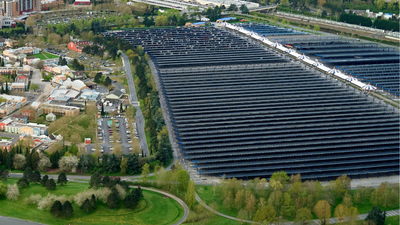
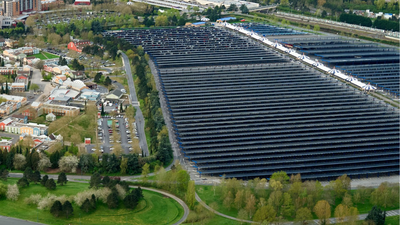
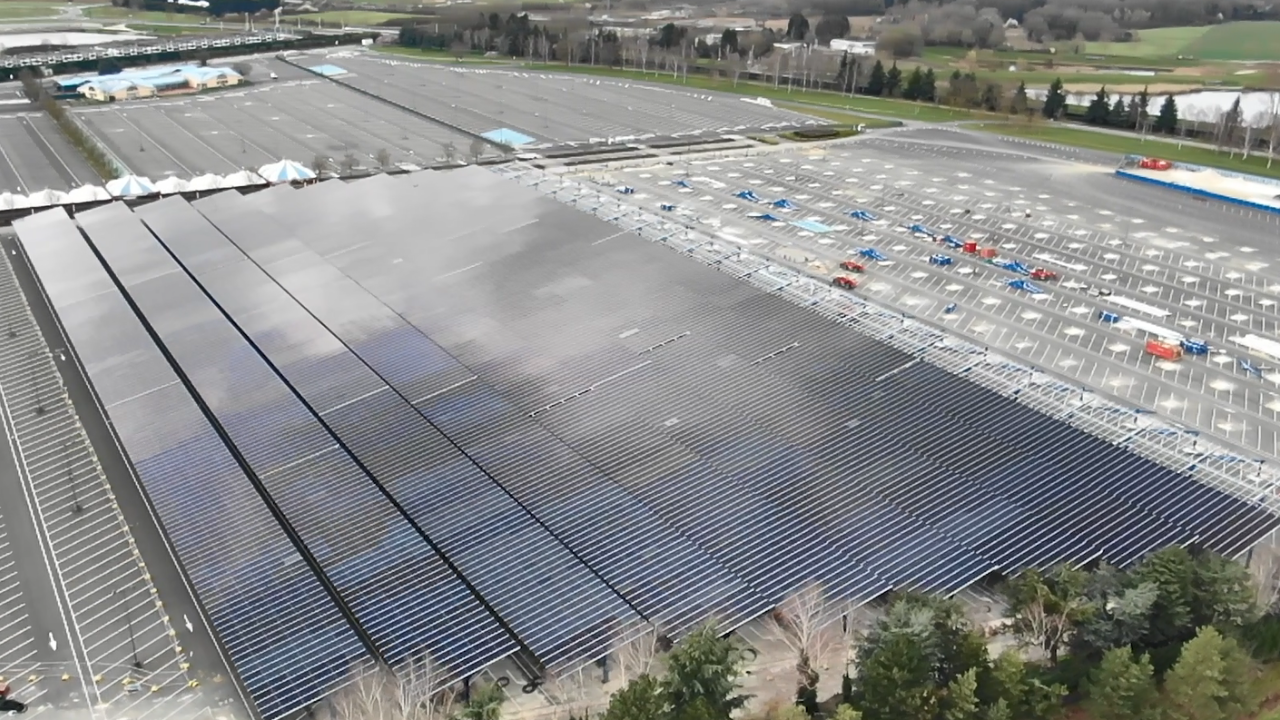
Disneyland Paris has quietly turned one of its most ordinary spaces, a vast visitor parking lot, into one of Europe’s most ambitious renewable energy installations. Covering 11,200 parking spaces with more than 82,000 solar panels, the resort has built the largest solar canopy over a parking lot in Europe, capable of producing 36 gigawatt-hours (GWh) of electricity annually. The project generates enough clean power to supply the equivalent electricity needs of about 17,000 homes while reducing carbon emissions in the surrounding Val d’Europe region. Beyond producing renewable energy, the canopy also provides shade and protection for vehicles, turning everyday infrastructure into a dual-purpose climate solution and highlighting how large urban spaces can contribute to the clean energy transition.
Disneyland solar power plant is built over 11,200 parking spaces
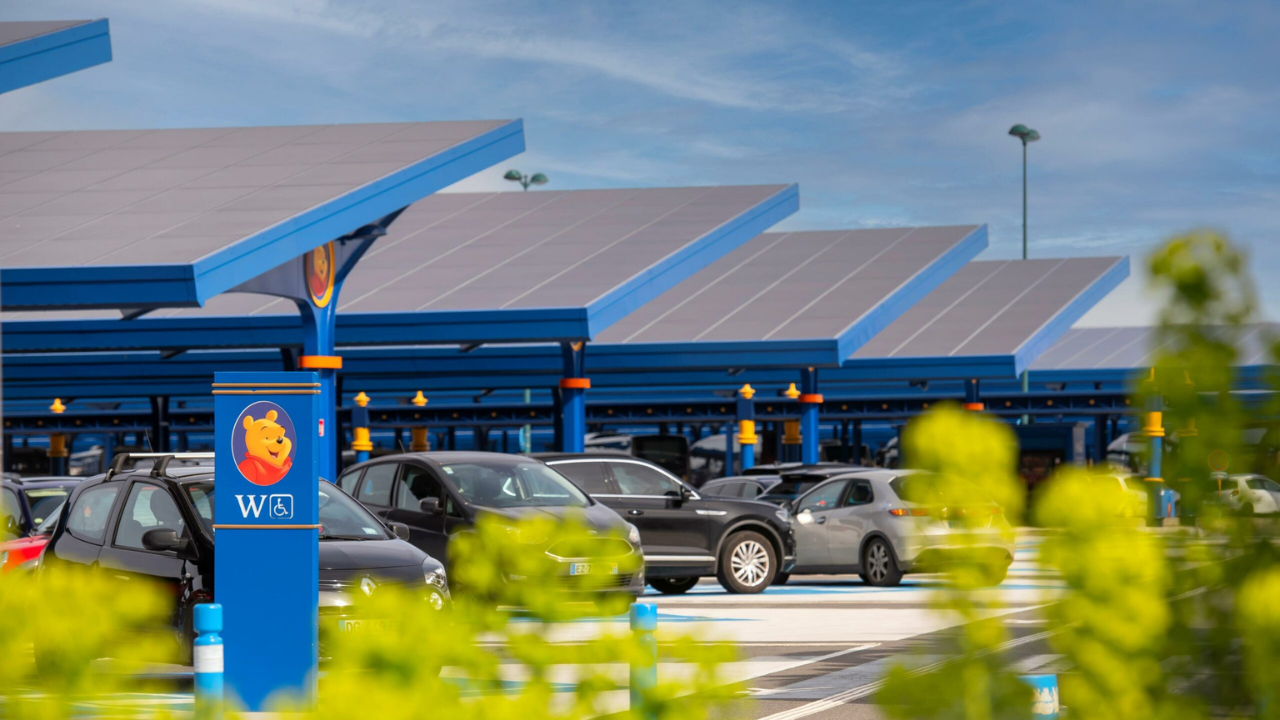
The project covers nearly 20 hectares, or about 49 acres, of the resort’s main guest parking lot. Installed across this area are roughly 82,000 photovoltaic panels with a combined capacity of about 36 megawatts, making it the largest solar parking canopy of its kind in Europe.The system produces around 36 GWh of renewable electricity every year. That output is enough to cover roughly 17 percent of Disneyland Paris’ electricity needs and is comparable to the annual electricity consumption of about 17,000 homes.The canopy structures serve two purposes at once. They generate clean electricity for the resort while also providing shade and protection for thousands of cars, camper vans and tour buses visiting the park every day.
A project launched as part of Disney’s environmental strategy
Construction of the solar canopy began in 2020 as part of a collaboration between Disneyland Paris and the French solar developer Urbasolar, a subsidiary of the Swiss energy company Axpo.The initiative is part of Disney’s broader environmental commitments, including sustainability targets that aim to reduce greenhouse gas emissions and increase the use of renewable energy across its global operations.Natacha Rafalski, President of Disneyland Paris, has highlighted the importance of such projects for a destination that attracts millions of visitors each year.“We want to lead by example and demonstrate that large tourism destinations can operate responsibly while contributing to environmental progress.”The solar canopy project has become one of the most visible examples of how the resort is trying to integrate sustainability into its infrastructure.
Experts say solar parking canopies are a smart climate solution
Energy experts see projects like this as a promising model for cities around the world. Instead of using valuable land for solar farms, parking lots offer large open surfaces that can host solar panels without affecting other land uses.Damien Audric, Director of Planning and Environment at Disneyland Paris, said the project shows how renewable energy can be integrated into everyday infrastructure.“We produce renewable electricity locally while improving the experience for visitors by protecting their vehicles from heat, rain and snow.”Environmental planners also point out that large paved areas contribute to urban heat islands, where asphalt surfaces absorb and retain heat. Installing solar canopies can help reduce this effect by shading the ground while generating clean energy.
Cutting emissions while improving visitor comfort
The solar canopy contributes to efforts to reduce emissions in the region. Each year, the system is expected to avoid around 890 tonnes of carbon dioxide emissions by replacing electricity that would otherwise come from fossil-fuel sources.At the same time, the canopy improves comfort for visitors by providing shaded parking areas during hot weather. Vehicles are also protected from rain and snow, adding a practical benefit to the environmental advantages of the project.The installation also includes electric vehicle charging infrastructure, encouraging visitors to use cleaner forms of transportation when travelling to the park.
Part of a wider push toward renewable infrastructure
The solar canopy is only one part of Disneyland Paris’ broader sustainability efforts. The resort has introduced a number of environmental initiatives in recent years, including wastewater treatment improvements, geothermal heating systems and programmes aimed at reducing plastic waste.Such projects reflect a growing trend among large commercial destinations to integrate renewable energy directly into their infrastructure.As cities search for ways to expand clean energy without taking up additional land, the Disneyland Paris installation demonstrates how everyday spaces such as parking lots can become part of the energy transition.