
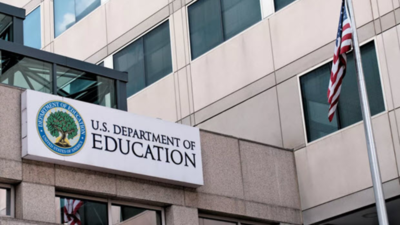
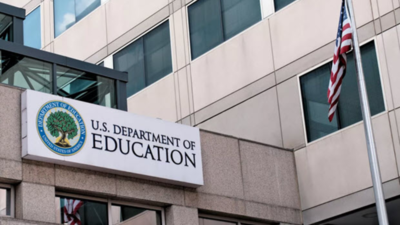
The U.S. Department of Education has issued fresh guidance directing colleges and universities to strengthen their efforts to prevent student loan defaults. The Department reminded institutions of their shared responsibility under Title IV of the Higher Education Act (HEA) to support borrowers throughout their repayment journey. The advisory follows earlier communication in May 2025 and comes at a time when nonpayment rates are rising at hundreds of campuses across the United States.The Department has made it clear that institutions must take a more active role in preparing students for repayment and reducing delinquency. Failure to do so could result in serious consequences, including loss of eligibility to participate in federal student aid programs.
Over 1,800 institutions show high nonpayment rates
Alongside the guidance, the Department released updated nonpayment rate data by institution. The data show that more than 1,800 colleges and universities have nonpayment rates at or above 25 percent. Officials said these figures may serve as an early indicator of whether an institution is at risk of failing the cohort default rate (CDR) measure.Under federal rules, an institution may lose access to student aid programs such as Direct Loans and Pell Grants if its CDR is 30 percent or higher for three consecutive fiscal years. A single-year CDR of 40 percent can also lead to loss of eligibility for Direct Loan participation.These thresholds are significant because federal student aid remains a primary source of financial support for millions of students. A loss of eligibility can directly affect institutional enrolment, finances and student access to higher education.Under Secretary of Education Nicholas Kent said rising nonpayment rates demand urgent attention. He stated that while borrowers have an obligation to repay their loans, institutions also share responsibility in ensuring students are well-informed and prepared for repayment.
Institutions urged to strengthen outreach and counselling
The Department has called on colleges to conduct proactive outreach to former students who are delinquent or already in default. Institutions are encouraged to use existing communication systems, including email, text messaging and alumni networks, to reconnect with borrowers.Among the best practices that are recommended is the establishment of borrower support websites on the college website. This is where the borrower can get information on repayment, financial literacy, and assistance programs. Colleges are also encouraged to assign staff members to offer financial literacy services and loan counseling.Importantly, the guidance states that default management should not be limited to financial aid offices. Institutional leadership, including presidents and senior administrators, must treat repayment outcomes as a strategic priority.The Department also urged institutions to use program-level earnings data to strengthen entrance counselling. By presenting realistic earning expectations, colleges can help students make informed decisions about borrowing and programme selection.
Focus on repayment reforms and rehabilitation options
The new guidance aligns with reforms introduced under President Trump’s Working Families Tax Cuts Act, which aims to simplify federal student loan programs and repayment options. Institutions have been encouraged to inform borrowers about the new Repayment Assistance Plan. The plan offers reduced monthly payments, waives unpaid interest and matches payments that lower loan balances.Colleges are also advised to inform defaulted borrowers about loan rehabilitation opportunities. Rehabilitation allows borrowers to restore their loan status and regain eligibility for federal aid.In addition, institutions are asked to review their financial aid packaging practices in light of recent legislative changes, including new authority to set lower program-level borrowing limits for federal loans.
Mandatory default prevention plans for high CDRs
Under Section 435(a)(7) of the Higher Education Act, institutions with a CDR of 30 percent or higher in a single year must develop and submit a formal default prevention plan. The plan must include the formation of a default prevention task force, identification of factors contributing to high default rates, and measurable objectives to improve repayment outcomes.The Department said that the current state of affairs offers colleges a chance to review their own internal processes and encourage responsible borrowing.With federal student aid on the line, the message from Washington is clear: colleges must take immediate action to improve loan repayment outcomes or forfeit their access to vital funding sources that serve millions of students across the country.