NEW DELHI: “Andhera chhatega, suraj niklega, kamal khilega … “ When Atal Bihari Vajpayee had said this after BJP’s humiliating two-seat performance in the 1984 Lok Sabha elections, it was more of a statement of faith than a prophecy.More than four decades later, the BJP under Prime Minister Narendra Modi has transformed Vajpayee’s prophecy into political reality. The party, that once had just two members in Parliament, today dominates both the Houses and is going from strength to strength.In fact, such is BJP’s dominance in national politics at present that a victory in state assembly elections transforms into gains in Parliament. Well, that’s how the BJP’s victory in West Bengal has played out over the last one month. After Mamata Banerjee’s crushing defeat at the hands of BJP in West Bengal, at least 20 Trinamool Congress MPs are ready to dump their party and align with the BJP. And this is not a one-off phenomenon. Several other regional parties have seen their leaders gravitate towards the BJP after electoral defeats.The BJP’s story in 2026 is no longer merely about winning power. It is increasingly about adding and consolidating its gains so that the saffron party can achieve its long-term legislative goals. Parliament arithmetic matters when it comes to BJP’s plans to implement reforms like – One Nation, One Election, the delimitation exercise, which was defeated recently as the BJP did not have two-thirds majority, and finally the Uniform Civil Code, which some BJP-ruled states have already implemented.With that goal in mind, the BJP is slowly but surely, inching towards complete dominance of Parliament with the help of its allies in NDA and “friends” in other opposition parties.
Lok Sabha arithmetic
The BJP stormed to power in 2014 winning …. seats in Lok Sabha. Five years later in 2019 the saffron party increased its tally and returned with …. seats. In 2024, while the BJP-led NDA comfortably returned to power, the alliance’s numbers fell below the 300-seat mark. The BJP was restricted to 240 Lok Sabha seats. Undeterred by the setback, the BJP continued to work towards domination in both Houses. In Rajya Sabha, its dominance steadily increased with gains from victories in the states translating into numbers. However, in Lok Sabha where it lacked numbers, help came not just from its allies but also from “friends in the opposition camp.
Bengal: More than just another state victory
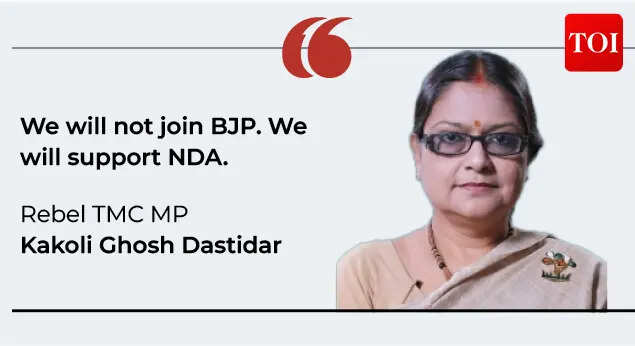
Nothing illustrates that strategy better than West Bengal. For years, Bengal represented the BJP’s most ambitious political project, a state where the party invested enormous organisational resources, leadership attention and electoral energy in an effort to challenge Mamata Banerjee’s Trinamool Congress.In May 2026, that effort finally paid off.The BJP stormed Bengal with a massive mandate, crossing the 200-seat mark in the 294-member assembly and ending Mamata Banerjee’s fifteen-year rule. For Prime Minister Modi and BJP’s “Chanakya” Amit Shah, who had spent years nurturing the party’s organisation in the state, the verdict represented one of the biggest political breakthroughs of the post-2014 era.But Bengal proved to be more than an electoral victory. It became a political multiplier.The BJP had not only defeated one of its fiercest rivals; it had also triggered a crisis inside the opposition camp.The Trinamool Congress was reduced to just 80 MLAs. Yet, the electoral defeat soon appeared to be only the beginning of its troubles.Within weeks, more than 50 legislators drifted towards a rebel camp led by expelled TMC leader Ritabrata Banerjee, exposing deep fractures within the party.The tremors did not remain confined to Kolkata. They soon travelled to New Delhi.Senior TMC leader Kakoli Ghosh Dastidar publicly emerged as a dissident voice and claimed support from a substantial section of the party’s Lok Sabha members. Reports of possible alignment between sections of the rebel camp and the NDA immediately changed the national political conversation.
For the BJP, Bengal has suddenly become about more than Bengal. It has become about Parliament.
A Parliament-first strategy
The significance of the Bengal developments lies in what they could mean for the BJP’s numbers in Parliament.Since returning to power in 2024, the NDA has enjoyed a comfortable majority in the Lok Sabha. Yet the alliance remains conscious of the fact that several major legislative proposals require broader political support and smoother parliamentary passage.The opposition demonstrated during the Budget Session that a coordinated front could still create hurdles for the government.Discarding the BJP’s push for the Delimitation Bill and amendments in the Women Quota Bill.That is why the BJP top brass has increasingly focused on strengthening its position not only through elections but also through political expansion and alliance-building.A divided opposition and a stronger NDA would majorly alter parliamentary equations.For the ruling side, the ultimate prize is not simply numerical superiority but legislative freedom.
Delhi and Bihar: The road to Bengal
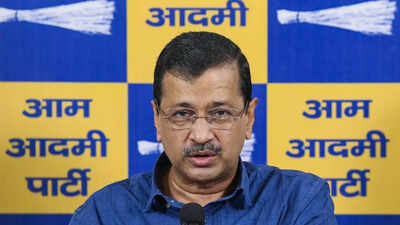
The Bengal triumph was preceded by a remarkable run of electoral successes that suggested the BJP had drawn lessons from the 2024 Lok Sabha verdict.The first came in Delhi.For nearly three decades, the BJP remained out of power in the national capital despite repeatedly performing strongly in parliamentary elections. Delhi politics had increasingly become synonymous with Arvind Kejriwal and the Aam Aadmi Party.That changed dramatically in 2025.The BJP returned to power after 27 years, winning 48 of the assembly’s 70 seats and stopping the Kejriwal-brigade to just 22 seats. Several prominent AAP bigwigs, including Kejriwal and his number two Manish Sisodia, conceded defeat from their seats, marking one of the biggest political reversals in the party’s history.If Delhi demonstrated momentum, Bihar showcased consolidation.Contesting alongside traditional “big brother” — Nitish Kumar’s Janata Dal (United), the BJP entered the election on an equal footing with its long-time ally.The NDA not only overcame anti-incumbency concerns but crossed the 200-seat mark very comfortably in the 243-member assembly.The result fundamentally altered the balance of power within the alliance.For decades, the BJP had played junior partner to Nitish Kumar in Bihar. The latest verdict changed that equation, paving the way for Samrat Choudhary to become the state’s first BJP chief minister.Taken together, Delhi and Bihar strengthened the BJP’s political map.Bengal expanded it.
From dominance to consolidation
The BJP’s current phase differs from the one that began in 2014.The years after Narendra Modi’s first victory were about expansion.The years after 2024 appear increasingly focused on consolidation.The BJP today governs across much of India. It has established itself in regions where it once had little presence and challenged parties that were once considered politically invincible.Its rise, however, did not begin with Narendra Modi.The journey stretches back to the Bharatiya Jana Sangh and the efforts of leaders such as Syama Prasad Mookerjee, Deendayal Upadhyaya, Atal Bihari Vajpayee and Lal Krishna Advani.The party’s first major breakthrough came under Vajpayee, whose National Democratic Alliance government between 1998 and 2004 established the BJP as a credible governing force.But the arrival of Narendra Modi in 2014 fundamentally changed the scale of the saffron party’s ambitions.The BJP won 282 seats in the Lok Sabha, becoming the first non-Congress party in Indian history to secure a majority on its own.When, Narendra Modi took oath as PM for the first time in 2014, the BJP held control of less than 10 states.Five years later, it expanded that mandate to 303 seats.The victories transformed the BJP from a coalition leader into the central pole of Indian politics.Veteran LK Advani often argued that the BJP’s growth came from presenting “a distinct ideological alternative” rather than trying to imitate Congress. Murli Manohar Joshi described the BJP as “a national movement, not merely a political party.”Under Narendra Modi and Amit Shah, those ideas evolved into a political machine capable of winning repeatedly across regions and social groups.The BJP expanded beyond its traditional northern and western strongholds, strengthened its presence in the Northeast, deepened its organisation in eastern India and steadily challenged regional parties in states where it once had little influence.
2019: From majority to dominance
If 2014 marked the BJP’s arrival as country’s principal political force, 2019 established its dominance.The Narendra Modi government went into the election seeking a second consecutive term amid an opposition that had attempted to rally under a broad anti-BJP platform. Instead of facing anti-incumbency, the BJP expanded its mandate.The party improved its tally from 282 seats in 2014 to 303 seats in 2019, while the NDA crossed the 350-seat mark.By then, the party’s footprint had expanded majorly. It had strengthened its presence in states where it traditionally performed well, while also making gains in the Northeast and eastern India.The organisational model built by Narendra Modi and Amit Shah appeared capable of converting welfare delivery, leadership appeal and grassroots mobilisation into electoral victories across regions.Speaking after the victory, Prime Minister Modi described the verdict as a mandate for “aspirations” and “New India”, while Amit Shah called it a victory of BJP workers across the country.The 2019 mandate also gave the BJP unprecedented political confidence. Several long-pending ideological and legislative priorities moved closer to the centre of the national conversation, reinforcing the belief within the party that it was entering its most influential phase since its formation in 1980.
The 2024 reality check
Despite its dominance, the 2024 Lok Sabha election served as a reminder that electoral success cannot be taken for granted.The BJP remained the single-largest party and the NDA returned to power comfortably.But the party did not replicate the numbers it achieved in 2014 and 2019.Inside BJP circles, the verdict triggered introspection.The lesson was simple: a government can function with a majority, but political projects to bring major reforms require larger numbers.Several proposals associated with the BJP’s long-term agenda would benefit from stronger parliamentary support.What followed over the next two years reflected that strategy.
Bonanza for BJP?
In May 2026 verdict, the BJP handed over bruising defeat to the “leading lady” of Bengal. But TMC’s return gift turned out to be a bonanza for the BJP.BJP not only gained control of Bengal, but the new political wave also swept up several leaders who had long added to the TMC’s strength and are now showing interest in aligning with the NDA.

Once a Mamata loyalist now turned rebel, Kakoli Dastidar in struck a defiant tone and said: “Mera sar katega lekin jhukega nahi… Maine bohot seh liya… I did not come here after Mamata Banerjee became chief minister in 2011; I have been fighting here for 40 years. And as I said, the words of such people have absolutely no effect on me.”She also attempted to frame the rebellion as a movement driven by larger national concerns. “We will find out what happens later. For now, isn’t it enough that we want to work for Bengal, for the country, and to keep India secure? This is a crucial issue. The issue of the nation is paramount to us.”
Raghav, rebels and Rajya Sabha
The rebellion in the BJP’s opposition camp did not take place in Bengal first. Weeks ago, Aam Aadmi Party saw its biggest rupture.Once a blue-eyed boy of Kejriwal, Raghav Chadha, after staying offbeat for a while, led the storm that jolted AAP.Rajya Sabha member Chadha disappointed with his placement in the party, caused a rebellion within and cut down two-thirds of AAP’s strength in the Rajya Sabha. The two-thirds mark made the move anti-defection proof and later the faction merged itself with the BJP.The BJP registered an impressive and sudden gain in the Upper House.With 22 states now in control, Rajya Sabha numbers for the saffron party are likely to boost further.
Why Parliament matters
The BJP’s current phase is increasingly defined by one word: Numbers.Numbers in the Lok Sabha.Numbers in the Rajya Sabha.Numbers within alliances.The developments inside the Trinamool Congress have therefore attracted enormous attention.A weakened opposition and a strengthened NDA could alter parliamentary equations at a time when several major legislative issues remain politically contentious.Among them are proposals linked to BJP’s long-promised decisions – delimitation, One Nation, One Election, women’s reservation implementation and other structural reforms.The opposition demonstrated during the Budget Session that coordinated resistance could complicate the government’s plans.A stronger NDA would majorly change that equation.That is why every additional MP matters.That is why every opposition split matters.And that is why Bengal’s political aftershocks are being watched so closely in New Delhi.
Tamil Nadu and new opportunities
Interestingly, the BJP’s calculations are not limited to Bengal.The political churn in Tamil Nadu has created another opening.The dramatic rise of Vijay’s TVK disrupted the state’s traditional political order, weakening both the giants — DMK and AIADMK.The Congress’s decision to move closer to the new political formation left the DMK visibly unhappy.As tensions grew within the opposition camp, the BJP found itself observing an opportunity it rarely enjoys in Tamil Nadu, the possibility of issue-based cooperation with regional forces that had previously remained firmly opposed to it.Whether such cooperation materialises remains to be seen.But the BJP’s willingness to explore those possibilities underlines a broader trend.The saffron party may look for ways to expand its influence beyond elections.
Beyond dominance
The BJP’s journey from 2014 to 2026 is very much based on power consolidation.
The party expanded geographically.It expanded organisationally.It expanded electorally.Today, it commands influence across much of the country and remains the dominant force in national politics.Yet the leadership appears convinced that the project remains unfinished.Delhi strengthened the BJP’s momentum.Bihar strengthened its position.Bengal strengthened its influence.And the political developments that followed have the potential to strengthen its parliamentary numbers.More than forty years after Vajpayee’s famous declaration, the BJP occupies a position that once seemed unimaginable.The question now is no longer whether the BJP can win elections.The question is whether it can convert its growing political dominance into the parliamentary strength required to shape the next phase of its agenda.That may well be the defining political story of the years ahead.